
Beta PsA: See this beautiful double star near Fomalhaut. Though long thought a binary, the stars are moving apart, proving they are just a line-of-sight pair.
Category Archives: Double/Multiple Stars
94 Aquarii: A Triple Star in Aquarius
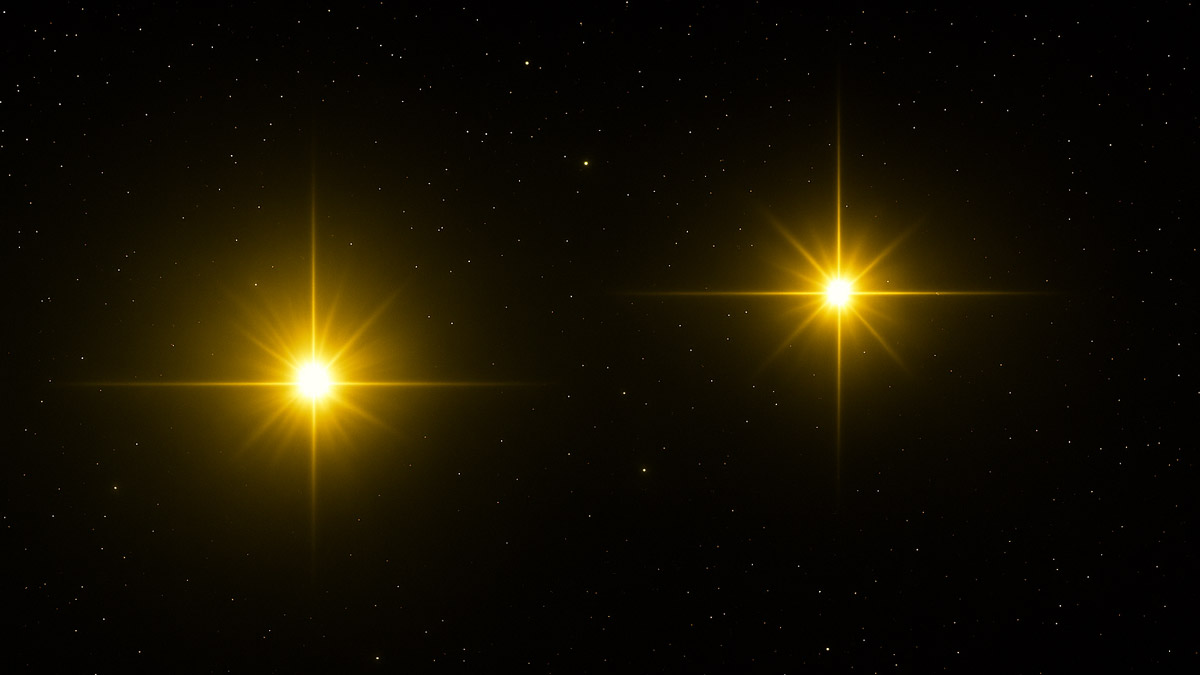
94 Aquarii is a triple star in Aquarius with a warm yellow primary and a subtle companion. A rewarding target for small telescopes in autumn skies. Learn about it and see what it looks like in telescope.
91 Aquarii (Psi1 Aquarii): A Mulitple Star System
Zeta Aquarii, a binary star system in Aquarius, is about 92 light-years away. First identified by William Herschel in 1777, it appears as a single point to the naked eye. Both stars are similar F-type main-sequence stars, orbiting each other every 587 years, exhibiting complexity beneath their apparent simplicity. This post explores the star and illustrates what it looks like in the telescope. Also known as: STF 2909, SAO 146108, HIP 110960, GC 31398, HR 8558, Zet1 Aqr, 55 Aquarii, HD 213052, 55 Aqr
Delta¹ and Delta² Gruis: An Optical Double Star
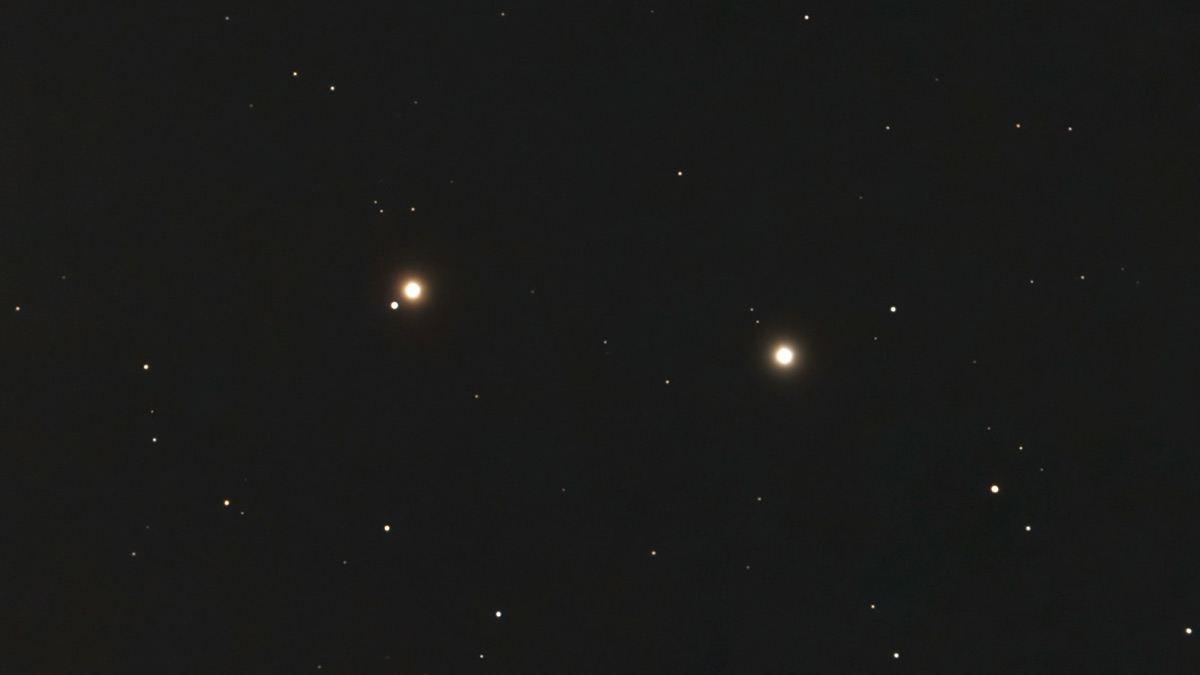
Explore Delta¹ and Delta² Gruis, a striking optical double star in Grus, with viewing tips and a detailed Seestar image.
Anser: A Warm Double Star in Vulpecula

Anser is a bright optical double star in the constellation Vulpecula. It is a member of the Arcturus stream, meaning the Milky Way stole the star from a dwarf galaxy in the past.
VV Cephei: The Colossal Supergiant of Cepheus

Explore VV Cephei, a massive red / orange supergiant in Cepheus. Find viewing tips, photos, and sketches for this rare and fascinating star.
Struve 331: A Binary of White and Blue-Green in Perseus

Struve 331 (HD 18537) is an optical double star in the constellation Perseus, bet viewed in Autumn. The pair of stars feature a bright white primary and a secondary fainter star that’s blue. Backyard astronomers should be able to split the double easily with most scopes to find that the bright white contrasted against the blue star makes for a pretty enchanting pair.
This double is also known as STF 331 and SAO 23763.
SHJ 282 (STT 525): A Multiple System of Orange and Blue in Lyra
Otto Struve 525 (aka STT 525) is a triple-star system that features a golden primary (Star A) with two companions (stars B & C) in the constellation Lyra. The Star C is a pretty blue color. Also known as SAO 67566.
 The Garden Astronomer