
Messier 45 is an open star cluster in the constellation Taurus. It’s best viewed in winter and early spring. Also known as the Pleiades, or Seven Sisters, M45 is one of the nearest clusters to Earth and one of the brightest and most recognizable objects in the night sky, even from brighter suburban skies.
Category Archives: Star Clusters
IC 1396: The Elephant Trunk Nebula in Cepheus

IC 1396 is an open star cluster in the constellation Cepheus, which is part of large emission nebula in the region. It’s best viewed during the autumn. The region makes for stunning astrophotography as demonstrated by this photo posted on NASA’s site. Struve 2816 (a triple star system) and Struve 2819 (a double star systemContinueContinue reading “IC 1396: The Elephant Trunk Nebula in Cepheus”
NGC 225: A Sailboat Sailing Through Cassiopeia

NGC 225 is an open star cluster in the constellation of Cassiopeia. It’s sometimes referred to as the Sailboat Cluster, as the stars make out a sailboat shape at wider magnifications.
Messier 50 (NGC 2323): That’s an “M” for Monoceros! An Open Star Cluster in Monoceros
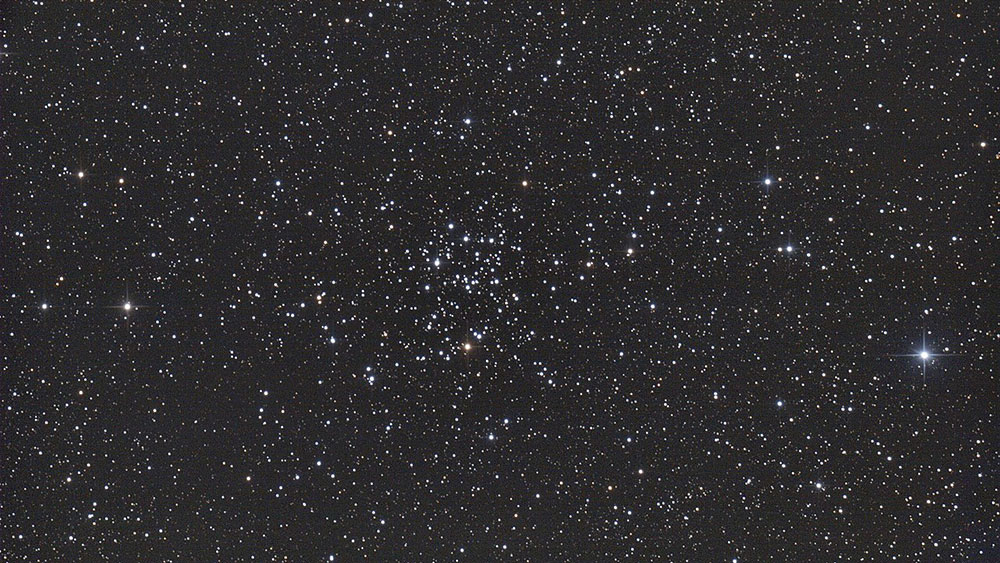
Messier 50 is an open star cluster in the constellation Monoceros. It’s best viewed in winter. Discovered by Giovanni Domenico Cassini in 1710, Messier 50 is part of the constellation Monoceros but lies near Canis Major. I’ve read various descriptions of the cluster over the years, including it looking like a “coil,” a “heart,” or,ContinueContinue reading “Messier 50 (NGC 2323): That’s an “M” for Monoceros! An Open Star Cluster in Monoceros”
NGC 7243: An Open Cluster with a Bonus Double Star in the Center
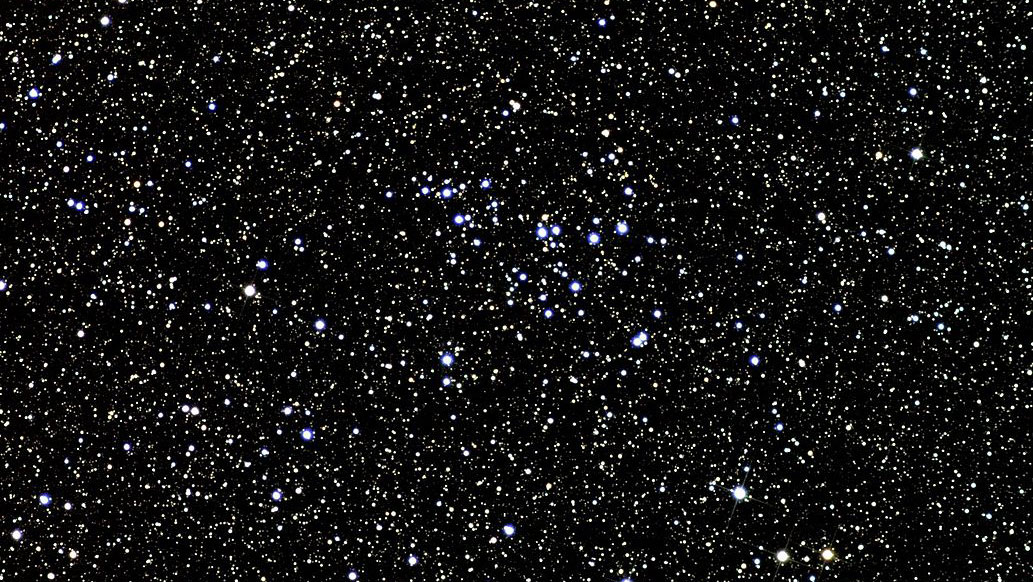
NGC 7243 is an open cluster in the constellation Lacerta. It’s best viewed in autumn through early winter. With lower power, the cluster appears as if it’s broken into distinct clumps with around 70 stars under magnitude 9. Notably, at the center of the cluster is the double star Struve 2890. The cluster floats inContinueContinue reading “NGC 7243: An Open Cluster with a Bonus Double Star in the Center”
NGC 6940: An Open Cluster with a Cherry on Top

NGC 6940 is an open star cluster situated 2,500 light-years away from us and best viewed in the summertime or early autumn. The older cluster features a rich field of red giants. The stars are fairly scattered across an area the size of the moon in the sky.
NGC 6820 and NGC 6823: Cluster of Blue Stars with a Beautiful Nebula
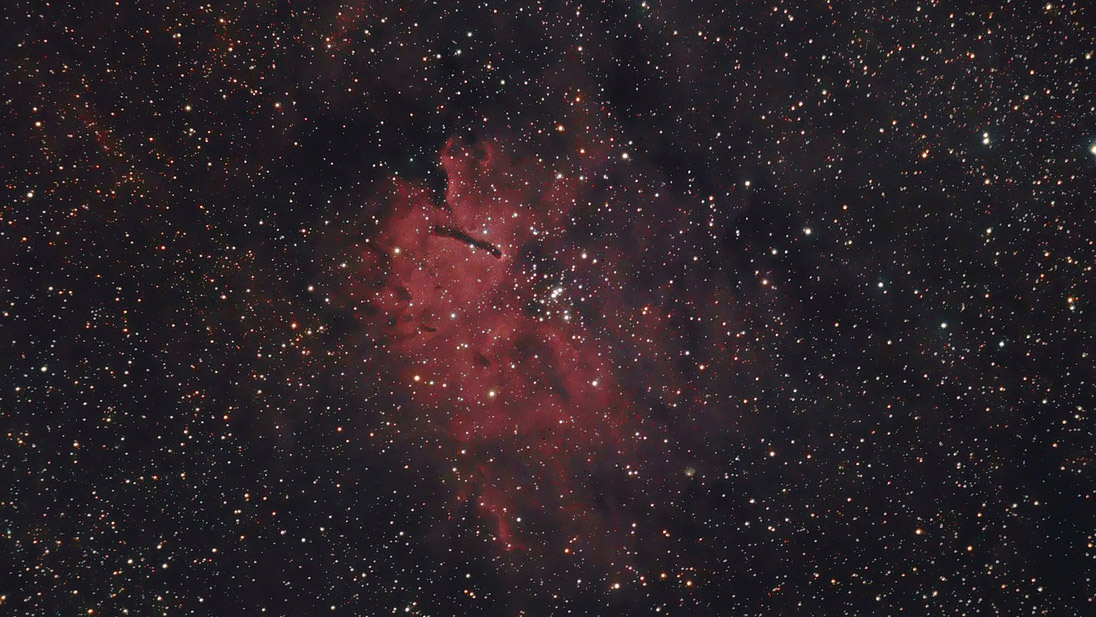
The star cluster NGC 6823 lies roughly 6,000 light-years away and appears in the summertime constellation Vulpecula. Adding to this stellar picture is a small emission nebula (known as NGC 6820) that surrounds NGC 6823 and its core of young blue stars. Together, these two NGCs belong to a larger faint emission nebula called SH2-86.ContinueContinue reading “NGC 6820 and NGC 6823: Cluster of Blue Stars with a Beautiful Nebula”
NGC 7063: A Cluster Looking Like the Big Dipper

NGC 7063 is an open cluster in the constellation Cygnus. It’s best viewed in summer through early autumn. This 7th-magnitude cluster is best viewed with a telescope. It is 2200 light years away from us and relatively small at six light years in diameter. My Observations DateOctober 1, 2022Time9:40 p.m.LocationSeattle, WAMagnification169xScopeMeade 8″ SCTEyepiece12mmSeeingGoodTransparencyGood Key StatsContinueContinue reading “NGC 7063: A Cluster Looking Like the Big Dipper”
 The Garden Astronomer