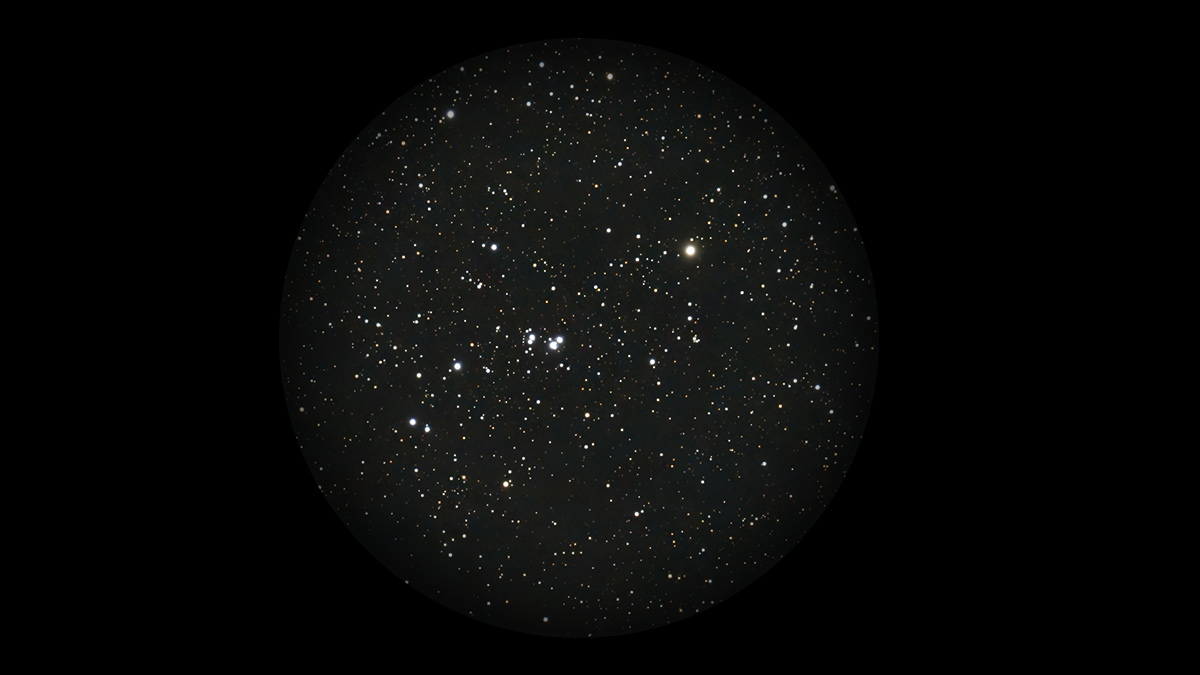
Explore the open cluster NGC 6871 in Cygnus with my observing notes, sketch, and Seestar photo. I also highlight the fascinating Wolf–Rayet star WR 133.
Category Archives: Star Clusters
Messier 52 (NGC 7654): A Small Scorpion in Cassiopeia
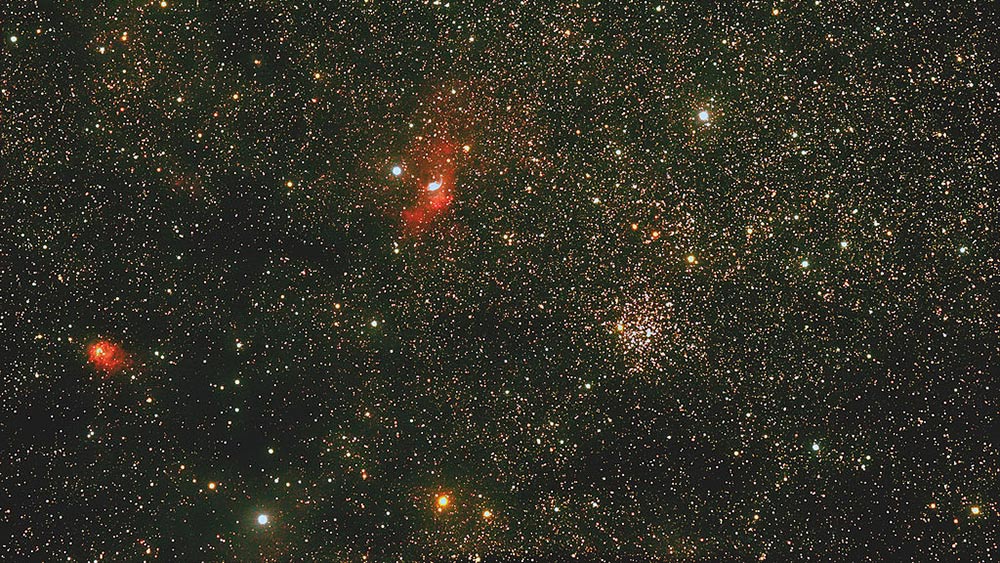
M52 is a condensed cluster of mostly faint stars sitting in the Milky Way sea of stars. This makes the object tougher to find.
Messier 20 (NGC 6514): The Trifid Nebula in Sagittarius
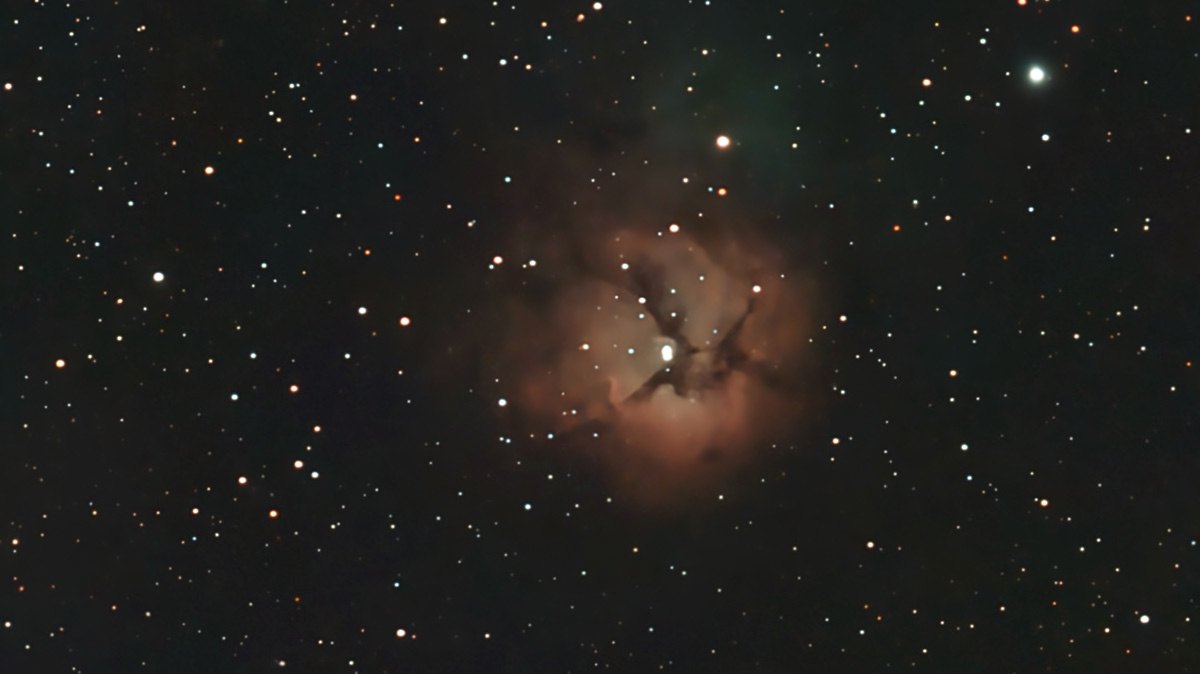
The Trifid Nebula, located in Sagittarius, is best viewed during summer months from June to August. Discovered by Charles Messier in 1764, it serves as a stellar nursery, approximately 5,200 light-years away. Modern telescopes have uncovered hidden stars and complex structures, making it a remarkable subject for backyard astronomers.
NGC 457: The Owl Cluster in Cassiopeia

An owl hides out in Cassiopeia, so on autumn and winter nights, turn your scope toward the constellation and look for cluster and its two bright stars that make up the eyes.
IC 4756: Graff’s Cluster in Serpens

Explore IC 4756, a bright open cluster in Serpens visible in summer skies. A beautiful binocular target amid rich star fields and nearby clusters.
Messier 21 (NGC 6531): A Compact Open Cluster in Sagittarius
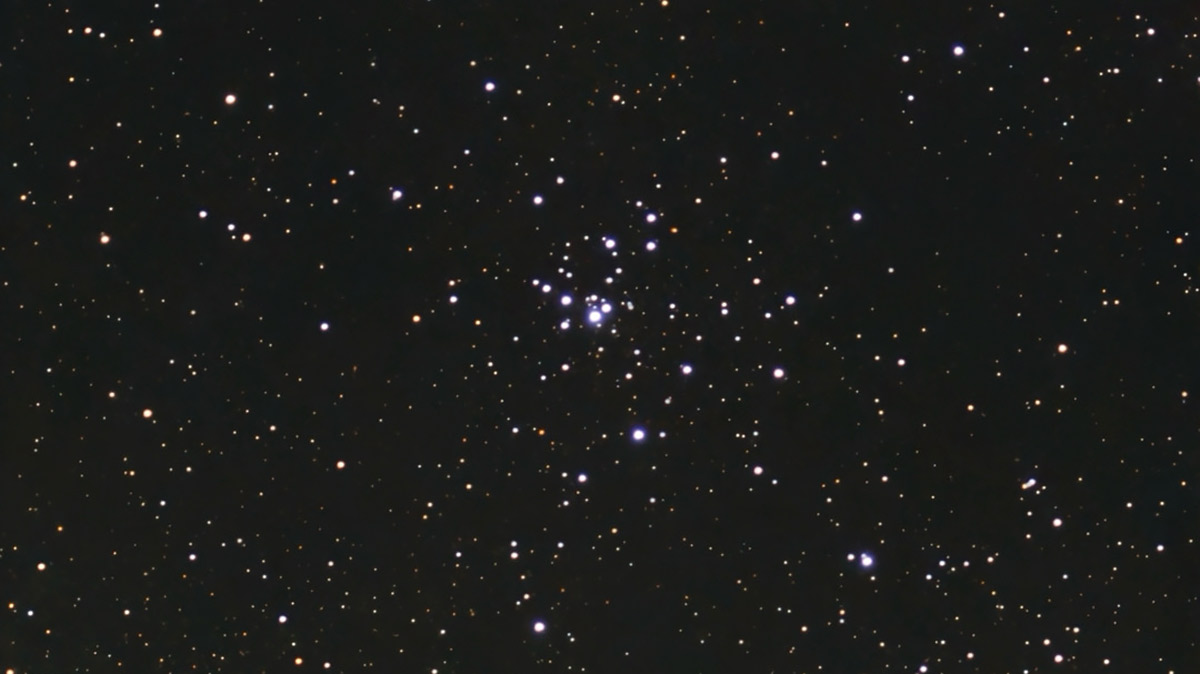
Messier 21, discovered by Charles Messier in 1764, is a compact open star cluster in Sagittarius. At approximately 3,900 light-years away, it contains 57 stars and offers a unique beauty, especially when viewed with binoculars or a telescope. It resides near the Trifid Nebula, making it a notable observation destination.
Messier 7 (NGC 6475): Ptolemy’s Ancient Cluster Still Shines Bright

Messier 7, or Ptolemy’s Cluster, is a prominent star cluster located in the Scorpius constellation, first recorded by Claudius Ptolemy in 130 AD. This open cluster, visible to the naked eye, contains 80 stars and spans 25 light years. It symbolizes the lasting human fascination with astronomy and the cosmos.
Learn more about the cluster, including a personal observation from Wayne McGraw and photo using a Seestar S50 under suburban skies in Florida.
Messier 25 (IC 4725): A Scattered Jewel in Sagittarius
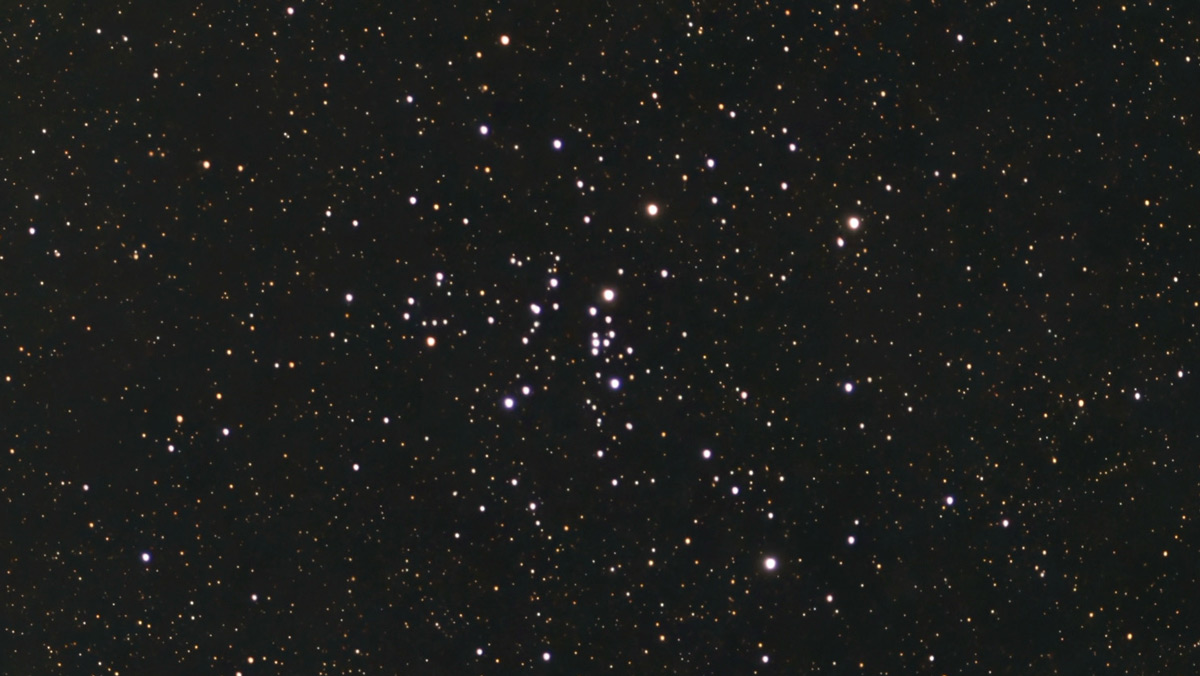
In the 18th century, Charles Messier cataloged celestial objects while searching for comets, including the beautiful open cluster Messier 25 (M25) in Sagittarius. Approximately 2,000 light-years away, it contains around 600 stars with no nebulosity. M25 is best viewed through binoculars or low-power telescopes during summer nights, offering a delightful starry tapestry. Also known as M25, IC 4725, Melotte 202
 The Garden Astronomer