
Vulpecula’s NGC 6830 is an older cluster with about 50 dim stars and is located around 5,300 light years away. Though many of its residents are dim, the cluster contains a few brighter stars making this a good target for backyard astronomers with a small to middle size telescope.
Category Archives: Star Clusters
Messier 26 (NGC 6694): The Cluster with a Little Hole

Messier 26 (NGC 6694) is an open cluster found in the constellation Scutum. It is best viewed in the summer in the northern hemisphere. Messier 26 is a fainter grouping of around 30 stars.
NGC 6229: A Very Distant Globular Cluster

NGC 6229 is a dim globular cluster in the summer constellation of Hercules. It lies nearly 100,000 light year away in the outer halo of the Milky Way. Still, amateur astronomers using a modest telescope can still view it.
NGC 6633: This Captain Hook Cluster Pulls You In

NGC 6633 is a bright open cluster in Ophiuchus, nearly moon-sized in the sky. A stunning binocular target rich with blue-white stars for summer nights.
IC 4665: Say “Hi” to a Brilliant Star Cluster and a Black Cat

This post summarizes how to view the open star cluster IC 4665, which lies in the summer constellation of Ophiuchus. IC 4665 is a large, course, and young star cluster with 30 stars, which are mostly blue-white or white in color. It’s a great object to view and enjoy with binoculars from the suburbs. Also known as Collinder 349 and Melotte 179.
Messier 14 (NGC 6402): Globular Cluster with an Elongated Glow

Messier 14 (NGC 6402) is a globular cluster in Ophiuchus best viewed in summer. It is slightly elongated in shape and looked fairly dim in my 8-inch SCT scope from the suburbs as my sketch shows. Still, it’s bright enough to see with binoculars from dark skies.
NGC 2129: Gemini’s Youthful Star Cluster

Not much is written about NGC 2129 in Gemini as this is a small cluster, but it houses two bright stars that are likely a binary. And, it’s a very young cluster in our galaxy.
NGC 2506: A Star Cluster in a Black Ocean
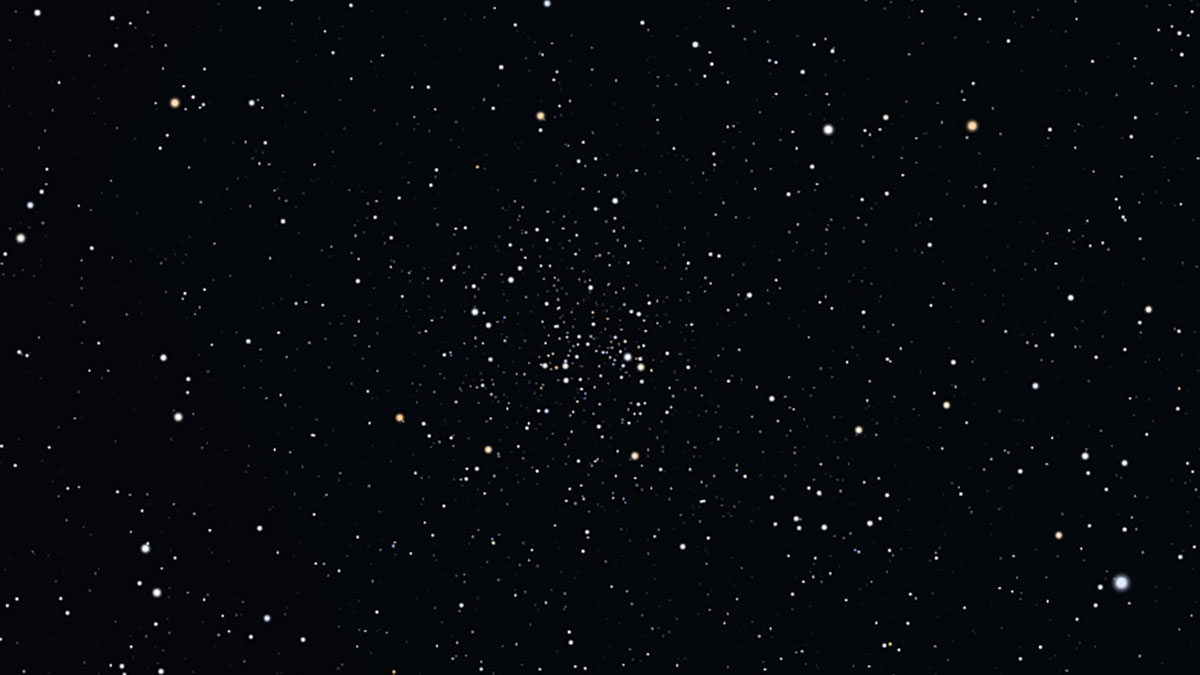
NGC 2506 is fainter open cluster in the constellation of Monoceros in winter. Around 150 stars make up the cluster, and it looks best through a telescope. Amateur astronomers also know the cluster by the names Caldwell 54, Melotte 80, and Collinder 170.
 The Garden Astronomer