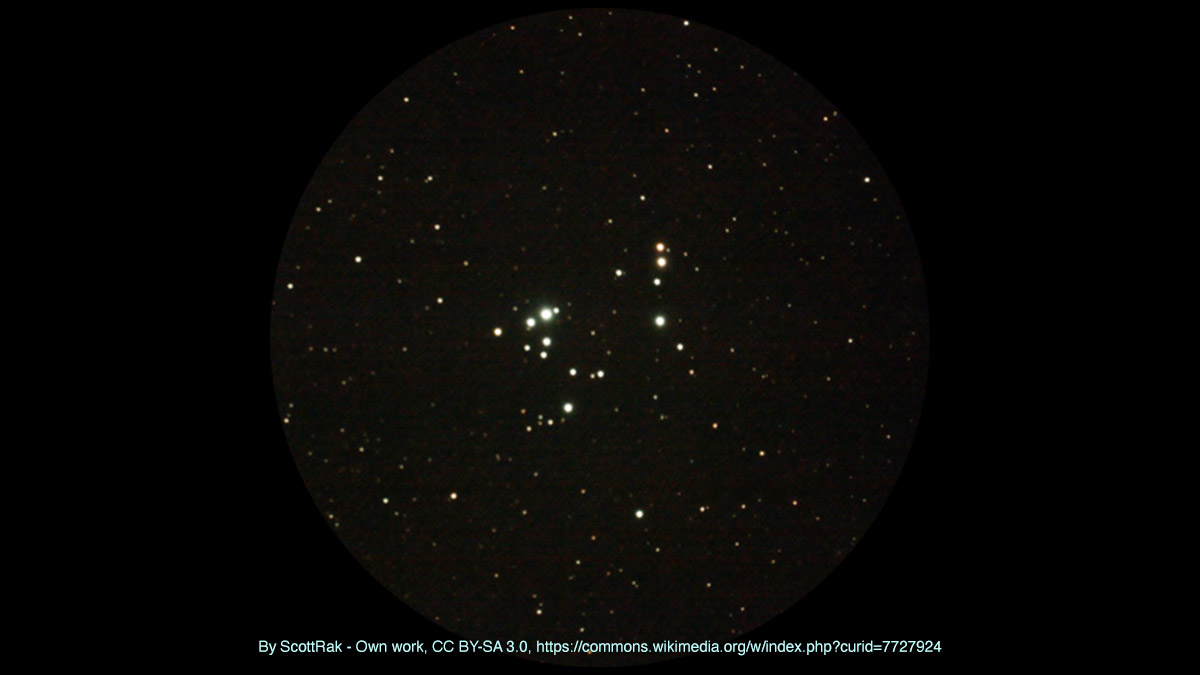
High above Orion’s Nebula and belt lies the star cluster NGC 2169, affectionately known as the “37 Cluster.” This arrangement of stars earned its nickname due to its resemblance to the number 37 when viewed through a small telescope or binoculars. It’s also known as Collinder 83, XY Cluster, and the LE Cluster
Tag Archives: Astronomy
6 (Iota) Trianguli: A Bronze and Blue Binary in the Constellation Triangulum

Triangulum is a distinctive northern constellation best observed in autumn and winter, featuring the Messier 33 galaxy and notable double stars like 6 Trianguli. Discovered by William Hershel, this binary system consists of a primary G5 giant and a fainter F5 dwarf star. It is a quadruple system with spectroscopic binaries.
Sisters Capture the Essence of the Stars

Discover how two sisters blend astronomy and perfumery to capture the cosmos in a bottle, tracing a lifetime of starlit memories and inspiration.
14 Aurigae (Struve 653): A Multiple Star System in Auriga

14 Aurigae, a prominent multi-star system in the Auriga constellation, features a bright primary star of +5 magnitude while the dimmer secondary appears blue. The stars are 286 light years away and separated by 14 arcseconds. As part of the Orion Spur in the Milky Way, 14 Aurigae provides insights into stellar evolution.
12 Comae Berenices: A Bright Double Star Greets You in Coma Berenices

12 Comae Berenices is a pretty double star in the northern constellation of Coma Berenices. At a magnitude around +4.8, backyard astronomers can enjoy this bright binary on spring nights.
88 Leonis (Struve 1547): A Fairly Wide Binary in Leo
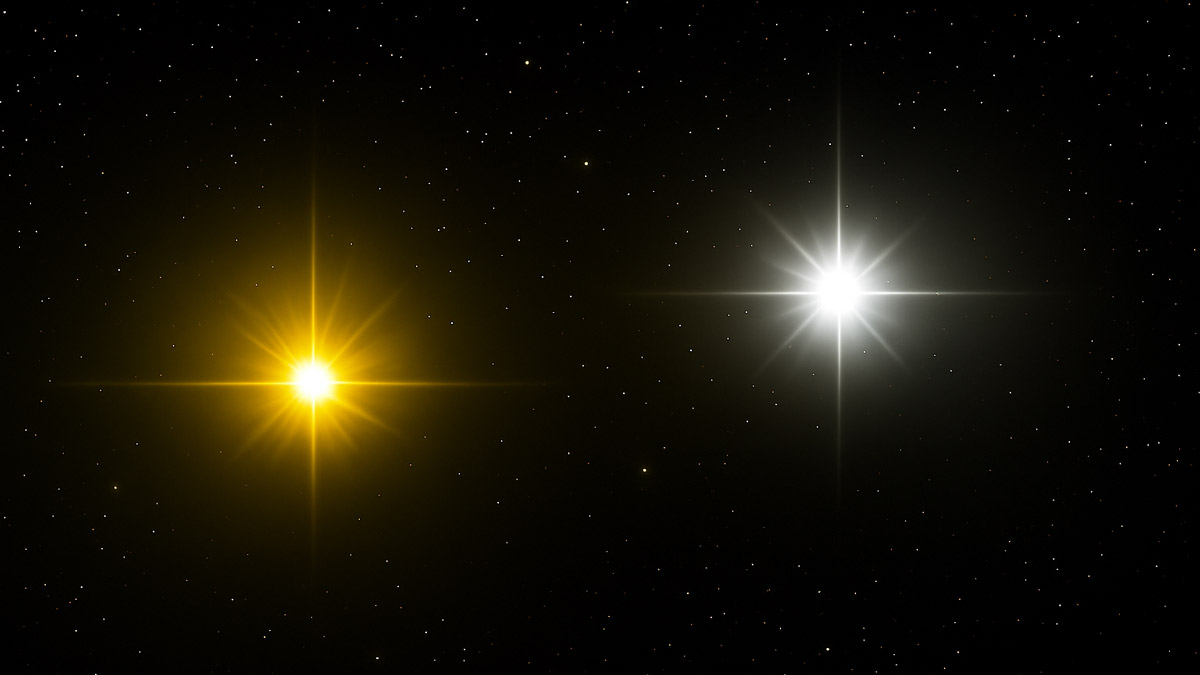
88 Leonis, also cataloged a Struve STF 1547, is a fairly bright binary star in the constellation Leo. This double star is a popular target in spring skies due to its brightness and wider 15.3 arc seconds of separation.
6 Leonis: A Glowing Orange Star with a “Dusky” Companion
6 Leonis is a double star in the constellation Leo. The primary star is a orange-red giant with a secondary star positioned 37″ arc seconds away.
10 Lacertae: A Blistering, Brillant Hot Blue Double Star

The double-star system known as 10 Lacertae resides in Lacerta, the constellation of the lizard, a dim constellation visible in the autumn and winter nights. The sky lizard offers a rich collection of deep-sky objects, and 10 Lacertae is one of them. Compared to 8 Lacertae, with its well-known multiple bright blue stars, 12 LacertaeContinueContinue reading “10 Lacertae: A Blistering, Brillant Hot Blue Double Star”
 The Garden Astronomer