
The double star Struve 2840 is located in the northern sky within the constellation Cepheus. Backyard astronomers should find it pretty easy to separate Struve 2840’s two stars, which are separated by 18 arcseconds. The pair is also known as STF 2840, SAO 33819, HD 208063, HR 8357.
Tag Archives: Cepheus
NGC 6946: The Fireworks Galaxy in Cepheus
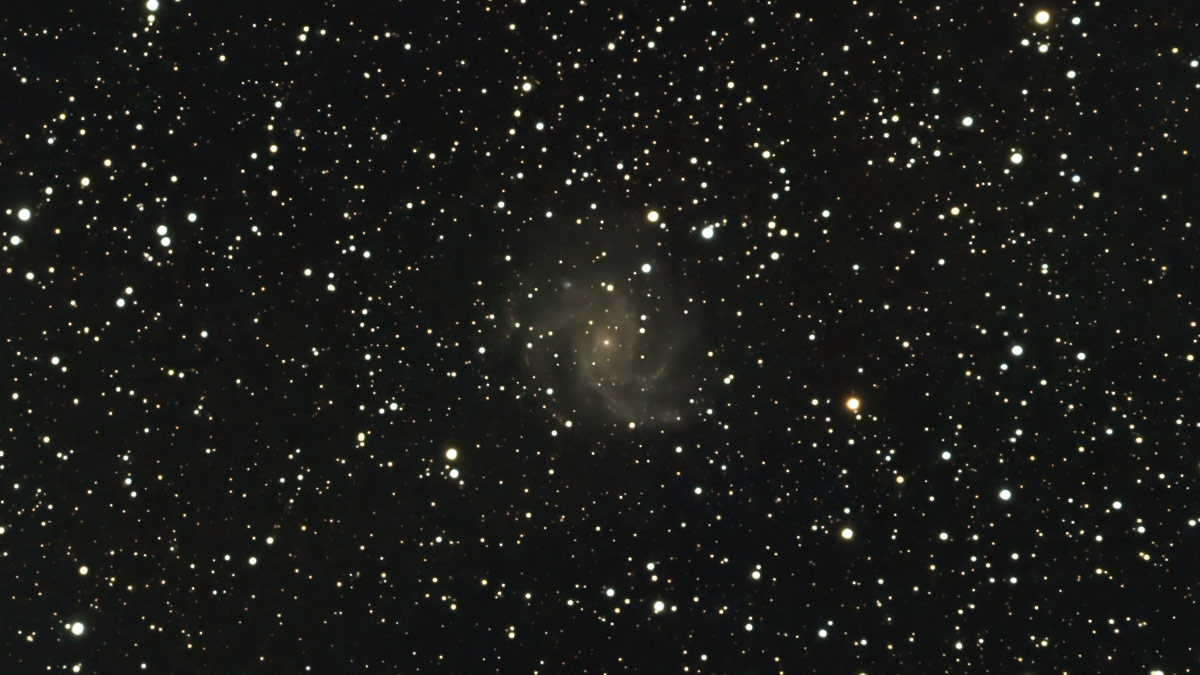
Discover NGC 6946, the Fireworks Galaxy—an active spiral rich in star formation. Includes Seestar S50 photo, sketch, and backyard observation notes.
VV Cephei: The Colossal Supergiant of Cepheus
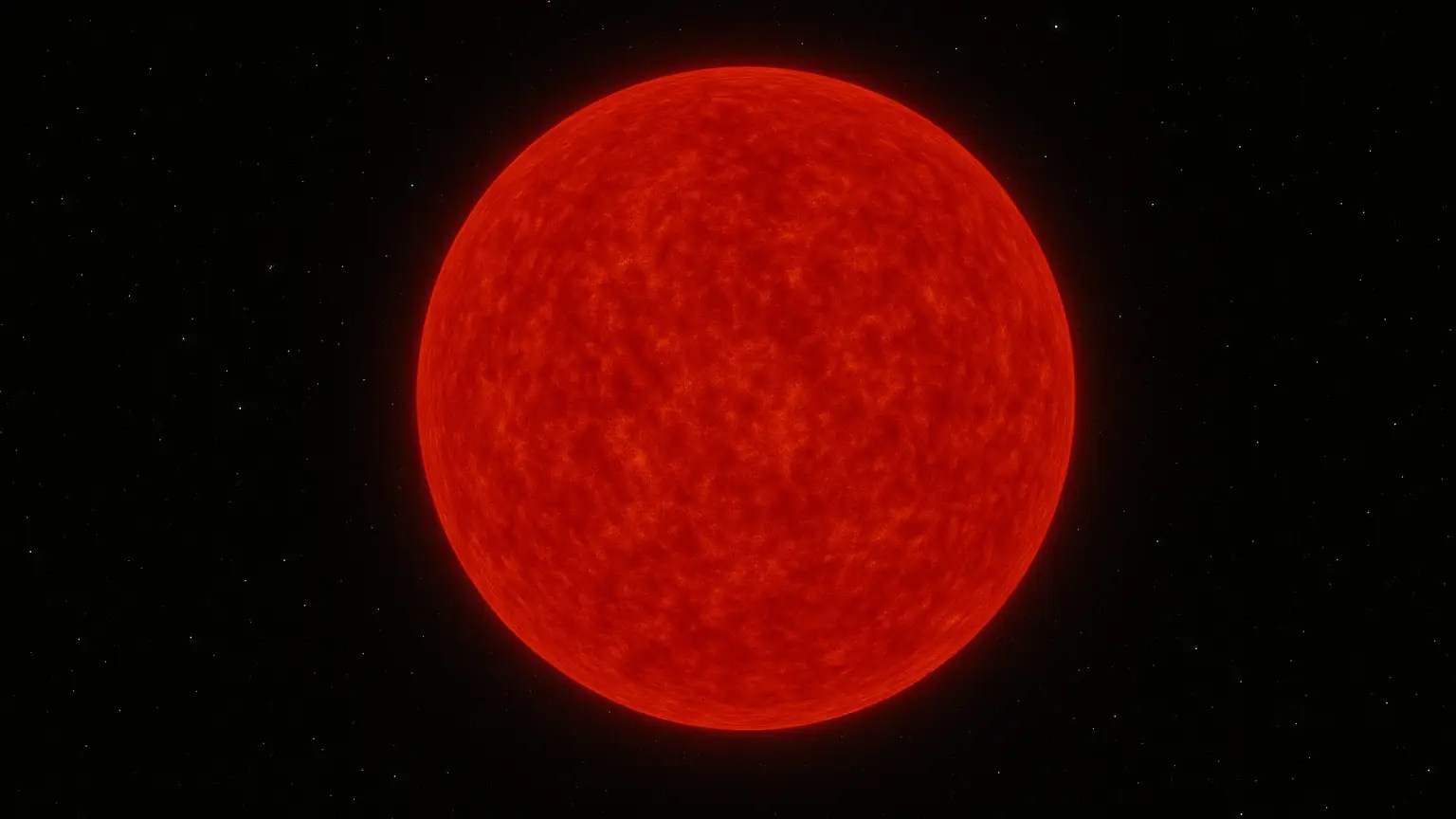
Explore VV Cephei, a massive red / orange supergiant in Cepheus. Find viewing tips, photos, and sketches for this rare and fascinating star.
The Iris Nebula: A Flower Blooming in the Dark
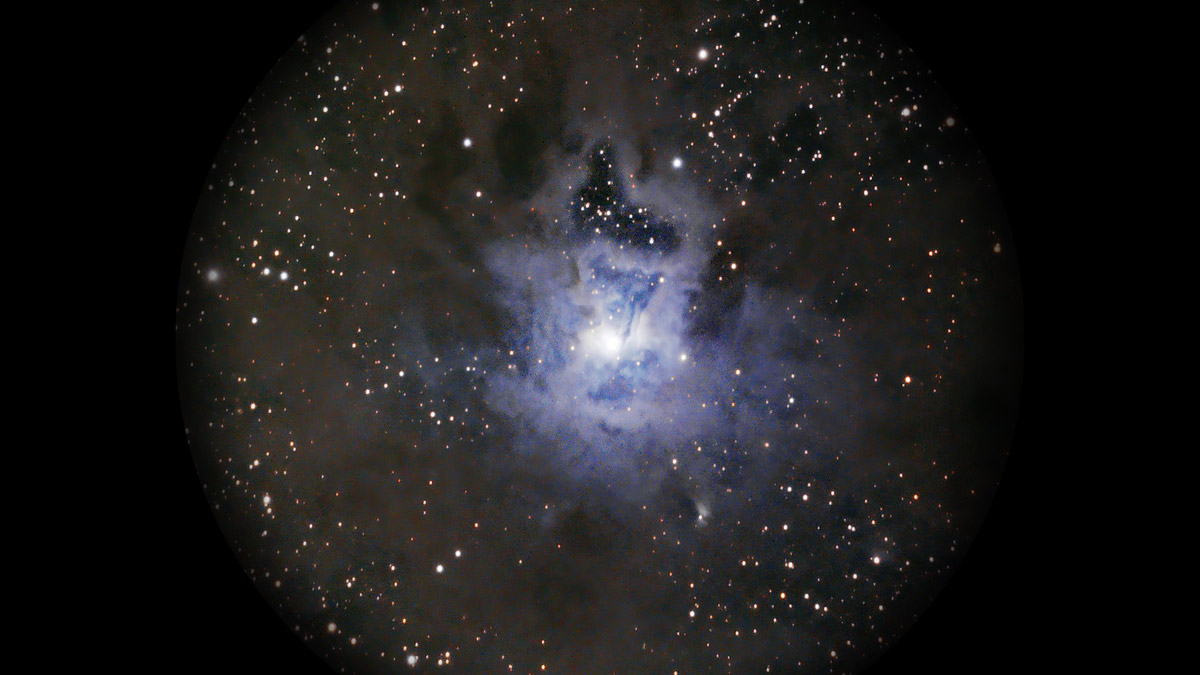
Explore the stunning Iris Nebula (NGC 7023 or Caldwell 4), a breathtaking reflection nebula in Cepheus. Discover how the central star illuminates its dust and gas, creating a glowing blue celestial flower. See my sketch and Seestar S50 image to visualize what you can expect to see. Learn about its history, distance (1,300 light-years), and why astrophotographers cherish this beautiful autumn target.
Mu Cephei: The Beautiful Garnet Star in Cepheus

Mu Cephei, also known as the Garnet Star, is a red supergiant star in the constellation Cepheus. It’s best viewed in autumn.
Struve 2840: An Easy to See Blue and White Pair in Cepheus

The double star Struve 2840 is located in the northern sky within the constellation Cepheus. Backyard astronomers should find it pretty easy to separate Struve 2840’s two stars, which are separated by 18 arcseconds. The pair is also known as STF 2840, SAO 33819, HD 208063, HR 8357.
Kappa Cephei: A Cosmic Dance Between a Bright and Dim Star
Kappa Cephei, also known as κ Cep and SAO 9665, is a binary star located in the Cepheus constellation. This pair is a tight, but pretty double viewed through a telescope and a good target for backyard astronomers. This system, discovered in 1782, is especially appealing because one star is brighter than the other. Learn about this autumn gem and what you can expect to see through your telescope.
Omicron Cephei: A Challenging but Rewarding Pair in Cepheus

Omicron Cephei, a binary star system situated in the northern sky in the constellation, Cepheus, consists of two contrasting stars; an F-type primary star and a G-type giant companion. This pair’s binary nature was first noted in 1832, and it lies 203 light years away, requiring a moderately-sized telescope for viewing. The binary is also known as SAO 20554, Struve STF 3001, HIP 115088.
 The Garden Astronomer