
Explore IC 4756, a bright open cluster in Serpens visible in summer skies. A beautiful binocular target amid rich star fields and nearby clusters.
Tag Archives: Serpens
Xi Serpentis (Nehushtan): A Triple Star in Serpens

Nehushtan, or Xi Serpentis, is a triple star system in the Serpens constellation, 105 light-years away. It will approach within 27 light-years in about 700,000 years. Named after a biblical idol, it showcases the intertwining of astronomy and faith. Observations highlight its brightness and challenging visibility of companions. Also known as 55 Ser, Xi Ser, SAO 160700, HD 159876, HIP 86263, HR 6561, GC 23881
Beta Serpentis: Binary Star and Traveler in the Ursa Major Group

Beta Serpentis is a binary star in the summer constellation Serpens. Of note, the pair also belong to the Ursa Major Moving Group.
Struve 2007: Exploring the Colorful Double in Serpens

Struve 2007 (STF 2007) is a double star in Serpens Caput, first documented in 1823. The closer AB pair features a yellowish-white primary and a blue secondary, while an AC component forms a wider triple. It’s visually appealing and accessible for telescopic observation, particularly noted for its striking colors and separation. Also known as SAO 101922, HD 144563, HIP 78873, STF 2007.
Struve 1931: Exploring the White Binary Star in Serpens
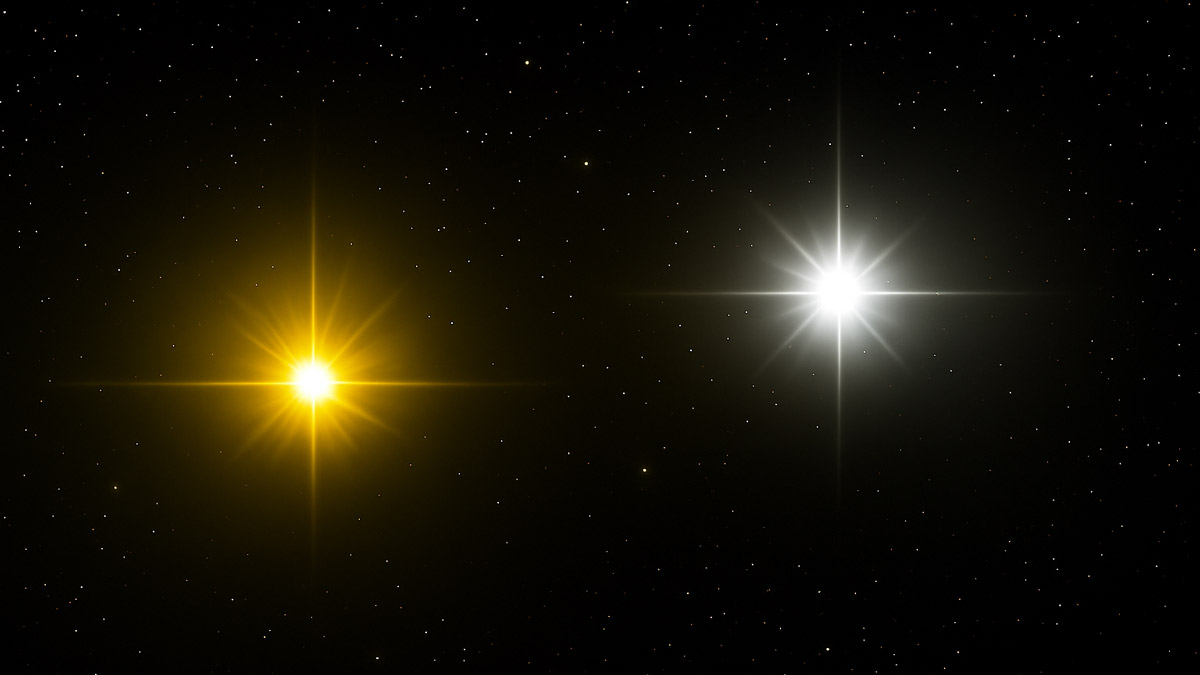
Struve 1931, situated in the Serpens constellation, is a binary star system ideal for mid-northern observations during spring and summer. With magnitudes of 7.2 and 8.0, it’s visible through small telescopes. The primary is an F7V star, while the secondary is a G3V star, displaying a striking color contrast.
Nu Serpentis: A White Double Star in Serpens
Nu Serpentis is a double star in the summer constellation Serpens also known as 53 Ser and HD 156928 or SAO 160479.
Struve 1919: Serpens Offers an Attractive Double of Peach and Blue
Struve 1919 is an attractive double star in the constellation of Serpens. It’s best viewed during the summer. The binary is also known as STF 1919, SAO 101438, HR5659, HD135101.
Messier 16 (NGC 6611): The Eagle Nebula

As summertime begins in the northern hemisphere, Messier 16 (also known as the Eagle Nebula or Star Queen Nebula) comes on the scene. The popular Eagle Nebula s a diffuse emission nebula located in the constellation Serpens.
 The Garden Astronomer