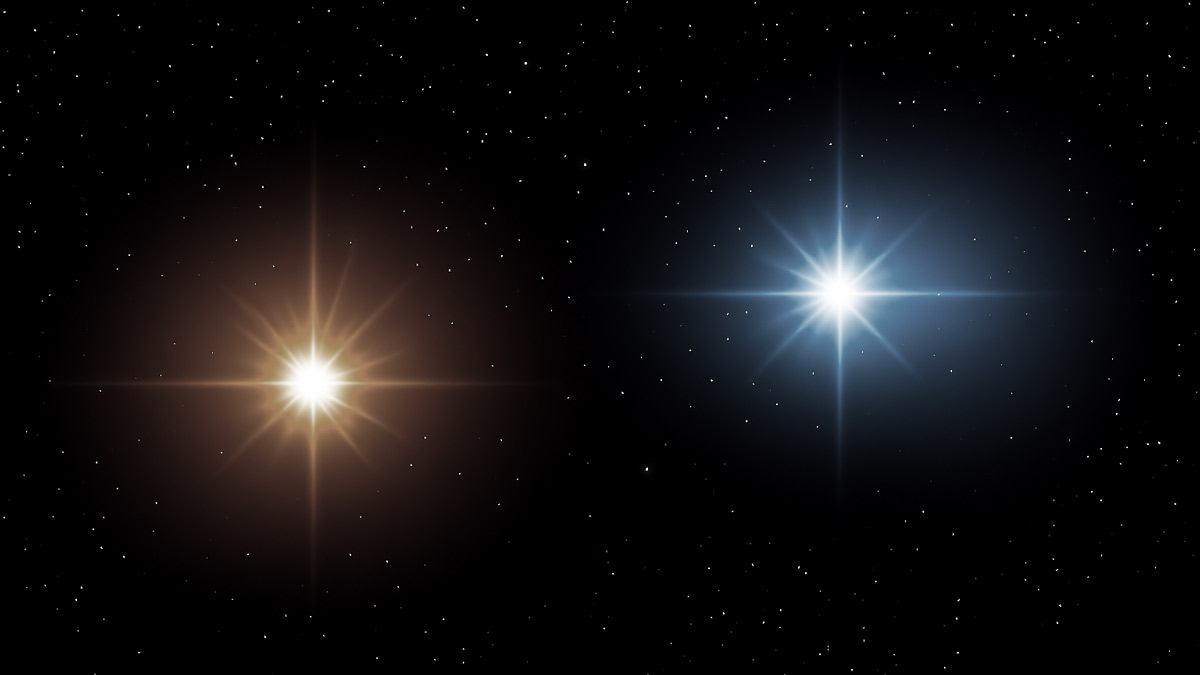
Anser is a bright optical double star in the constellation Vulpecula. It is a member of the Arcturus stream, meaning the Milky Way stole the star from a dwarf galaxy in the past.
Tag Archives: Vulpecula
Struve 2540 (HD 184360): A Tight Pair Near the Coathanger Asterism
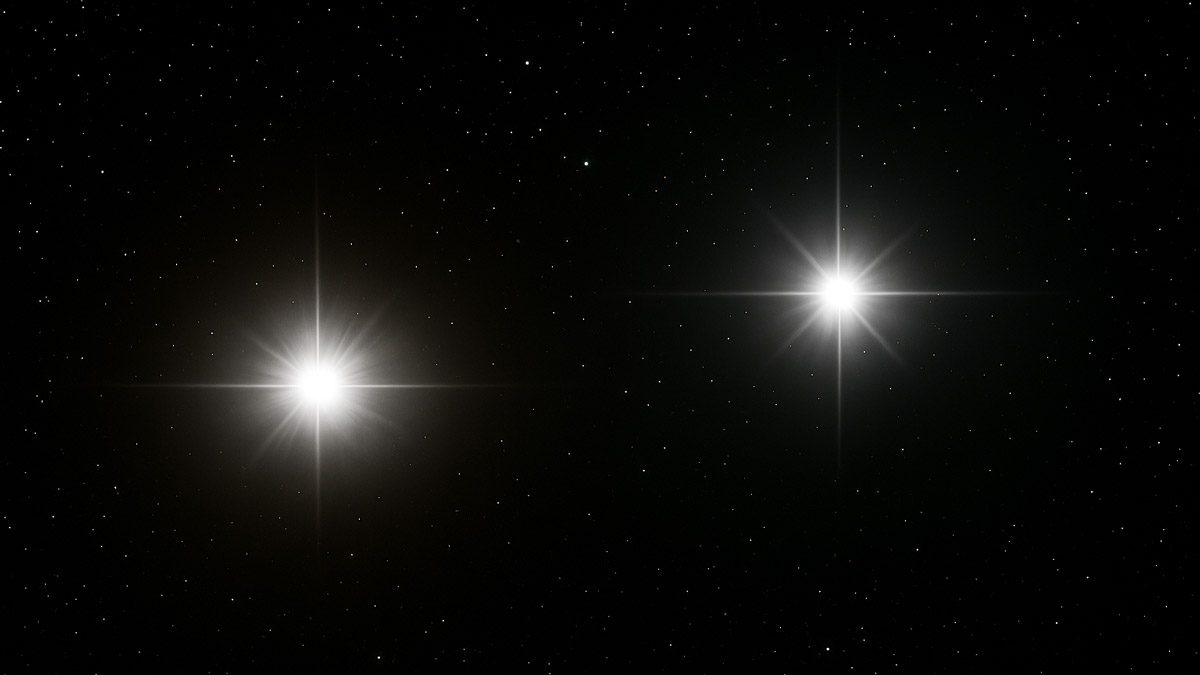
Struve 2540 (HD 184360) is a triple star system in the constellation Vulpecula. The stars lie in the popular Brocchi’s Cluster, nicknamed the Coat Hanger.
STF 2540 may be a tight pair to view under light-polluted stars, but astronomers will appeciate the view as the double floats among a pretty background of faint stars.
The Coathanger Asterism: A Cosmic Clothes Hanger in the Summer Sky
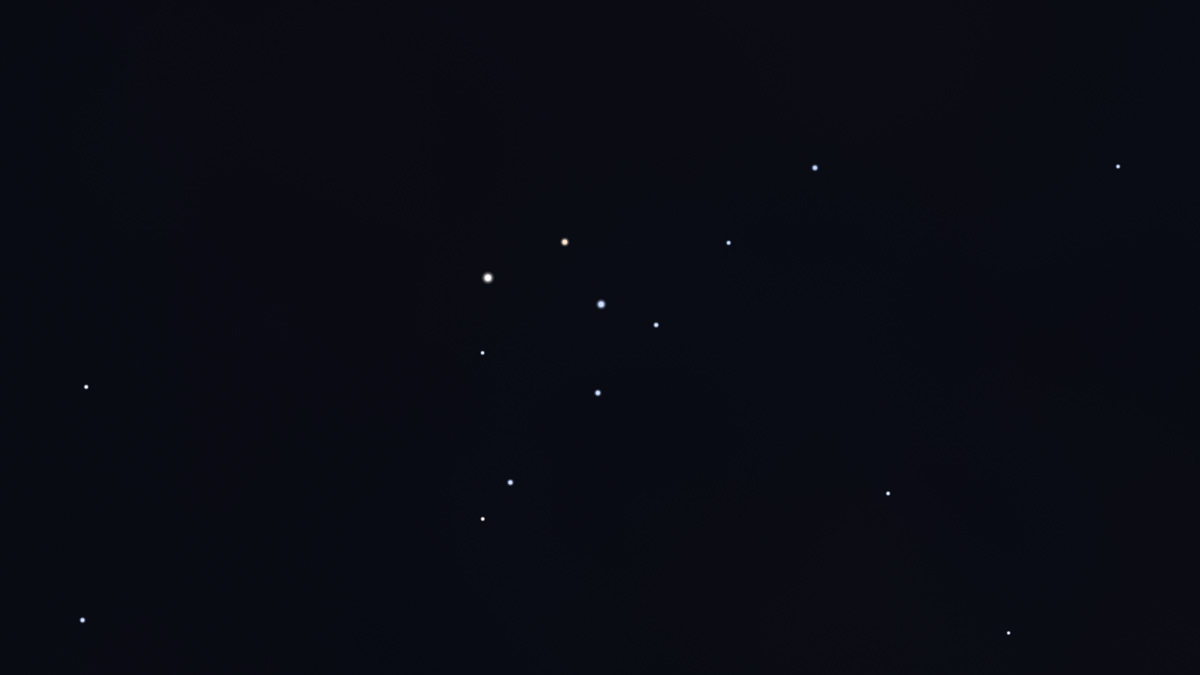
The Coathanger asterism, located in the constellation Vulpecula, is a distinctive pattern of ten stars resembling an old wire hanger. Initially described by Al Sufi in the 10th century, it’s not a true star cluster but an asterism. Ideal for binocular viewing, it’s perfect for casual stargazers. Also known as Brocchi’s Cluster and cataloged as Collinder 399.
NGC 6830: An Older Cluster Brings New Discoveries

Vulpecula’s NGC 6830 is an older cluster with about 50 dim stars and is located around 5,300 light years away. Though many of its residents are dim, the cluster contains a few brighter stars making this a good target for backyard astronomers with a small to middle size telescope.
Messier 27 (NGC 6853): The Dumbbell Planetary Nebula in Vulpecula

Messier 27 (NGC 6853) is a planetary nebula in the constellation Vulpecula. It is also known as the Dumbbell Nebula due to its distinctive shape resembling a dumbbell or hourglass. It’s best viewed in summer and early autumn. Amateur astronomers can find M27 fairly easy with binoculars and small telescopes, even from light-polluted suburban area as the sketch in this article shows.
NGC 6885 (Caldwell 37): A Cluster with a Shining Star Center

NGC 6885, also known as Caldwell 37, is a star cluster in the constellation Vulpecula and best viewed in summer or early autumn.
NGC 6940: An Open Cluster with a Cherry on Top

NGC 6940 is an open star cluster situated 2,500 light-years away from us and best viewed in the summertime or early autumn. The older cluster features a rich field of red giants. The stars are fairly scattered across an area the size of the moon in the sky.
NGC 6820 and NGC 6823: Cluster of Blue Stars with a Beautiful Nebula
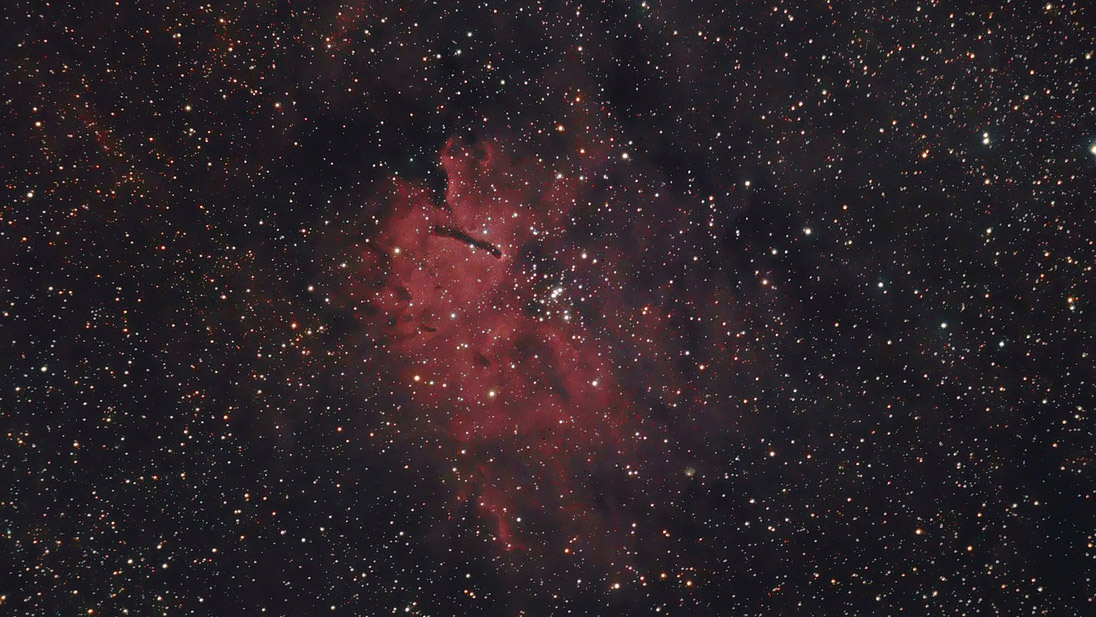
The star cluster NGC 6823 lies roughly 6,000 light-years away and appears in the summertime constellation Vulpecula. Adding to this stellar picture is a small emission nebula (known as NGC 6820) that surrounds NGC 6823 and its core of young blue stars. Together, these two NGCs belong to a larger faint emission nebula called SH2-86.ContinueContinue reading “NGC 6820 and NGC 6823: Cluster of Blue Stars with a Beautiful Nebula”
 The Garden Astronomer