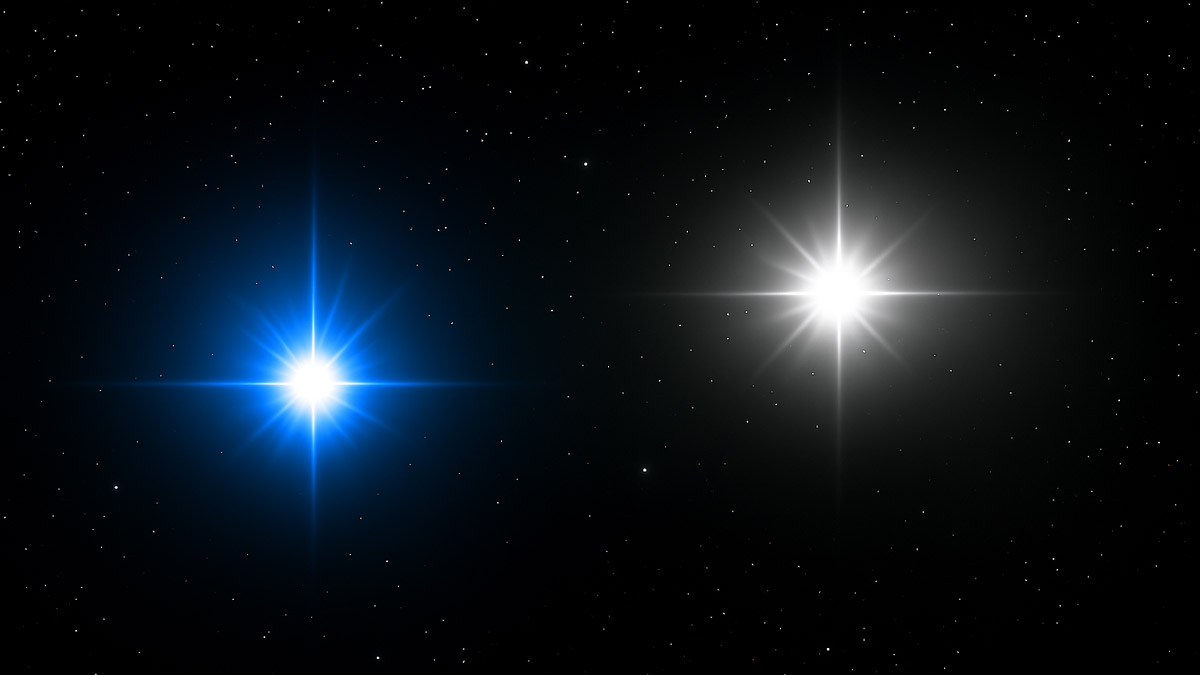
The constellation Cygnus, the swan, has its fair share of double stars, including the magnificent Albireo. The multiple star 59 Cygni joins this family of stars and is viewable during summer and autumn. Way back when, on October 27, 1980, the astronomer William Herschel discovered it.
The primary star is a beautiful blue-white color, shining at a magnitude of +4.7. It is known as a Be Star and rapidly rotates. Another star orbits this primary, but it’s only detected using spectroscopy, so we can’t see it optically. However, at only 21 arc seconds away, a secondary fainter white A-type star shines at +9.3. This pair makes a lovely sight in any scope!
My Observations
| Date | November 3, 2024 |
| Time | 10:22 p.m. |
| Location | Seattle, WA |
| Magnification | 169x |
| Scope | Meade 8″ SCT |
| Eyepiece | 12mm |
| Seeing | Above Average |
| Transparency | Above Average |
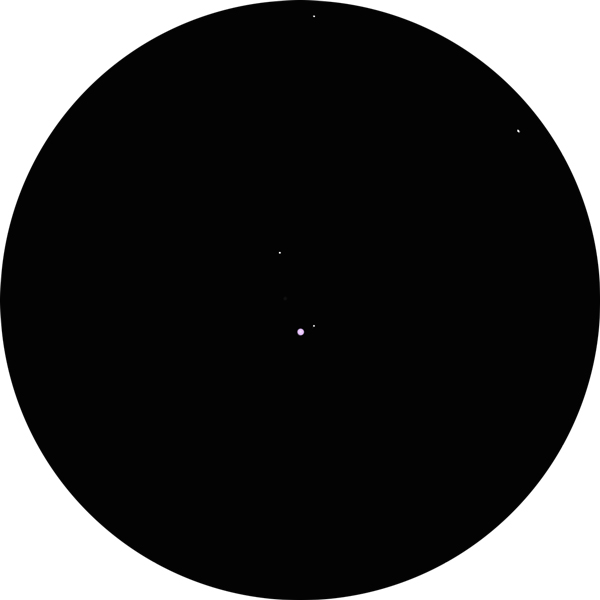
59 Cygni has multiple companions, and on this evening, I’m unsure if the faint stars nearby are these dimmer partners. However, the two brighter stars in the center make for a pretty sight. In particular, I really like the vibrant primary star. It shines like a diamond with a mix of blue and white colors. This is a definite pair to check out in Cygnus!
Key Stats
| Constellation | Cygnus |
| Best Viewing | Summer / Autumn |
| Visual Magnitude | +4.7 | +9.3 |
| Distance from Earth | 1,418 ly |
| Separation | 21″ |
| Position Angle | 353° |
| Milky Way Location | Orion Spur |
| My Viewing Grade | A- |
| Designations | 59 Cyg, STF 2743, V832 Cyg, HR 8047, SAO 50335, HD 200120 |
Sources and Notes
Banner adapted from an illustration created by Pablo Budassi. The illustration is licensed under the Creative Commons Attribution-Share Alike 4.0 International license. Full details here.
Sketch by Wayne McGraw
 The Garden Astronomer
WOW this is gorgeous!! I just love the color 🙂
LikeLike