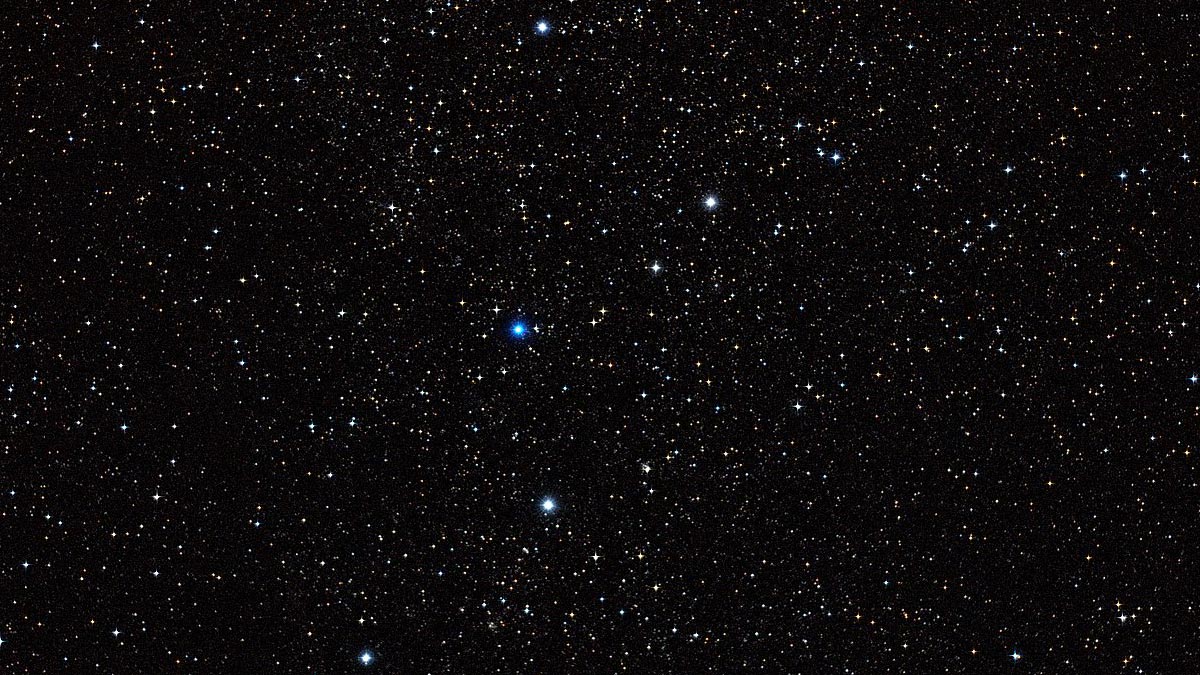
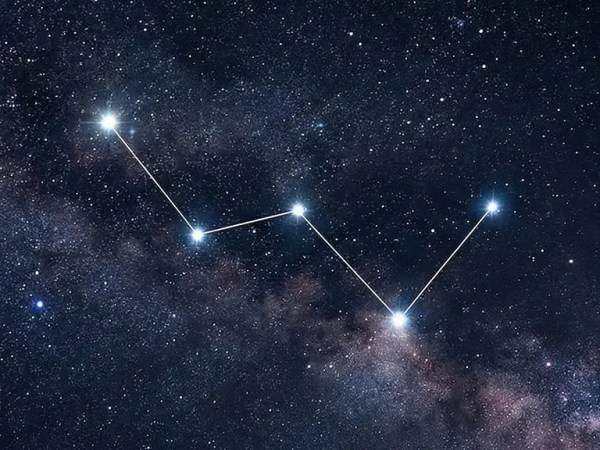
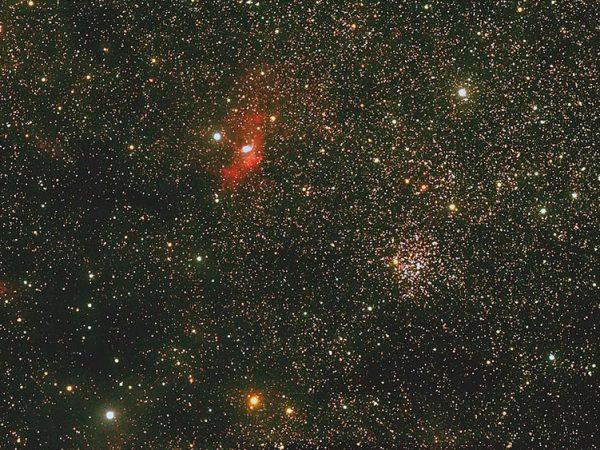
When most people look toward the constellation Cassiopeia, they see the famous “W” or “M” shape etched across the northern sky. It’s one of the most recognizable patterns in the heavens. But tucked into that royal throne of stars is a lesser-known treasure: Iota Cassiopeiae, a delicate multiple star system that’s a joy for anyone with a telescope.
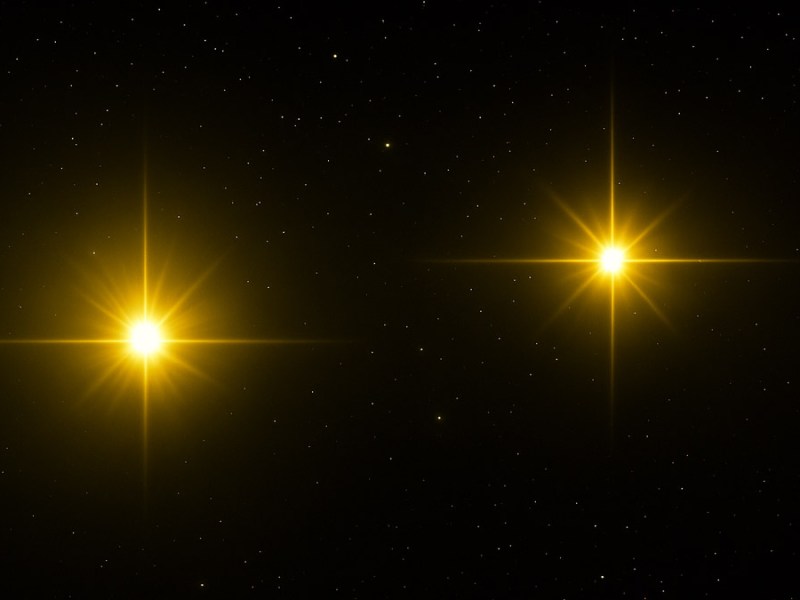
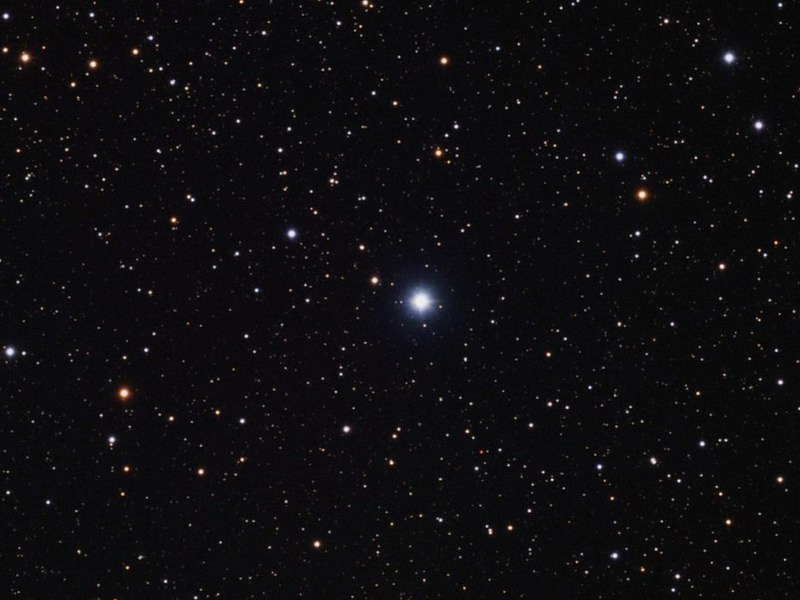
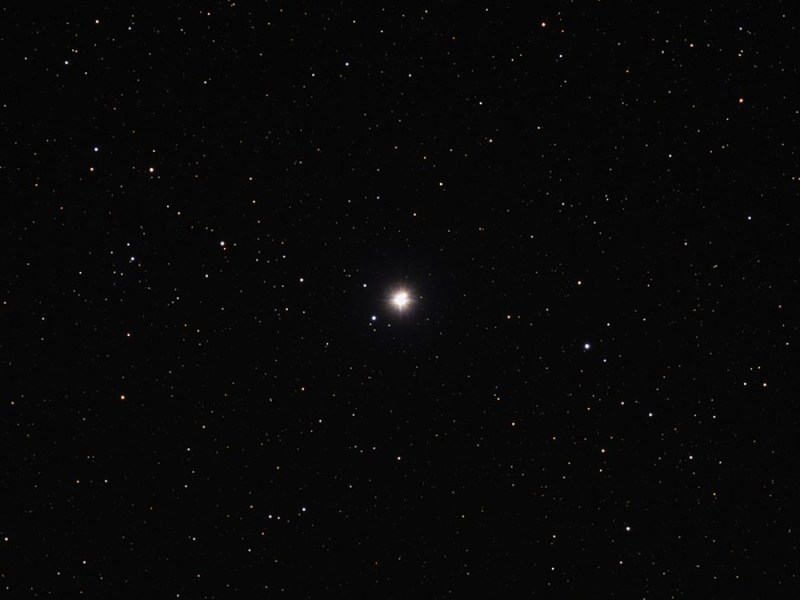
At first glance, Iota Cassiopeiae appears like a single star to the naked eye, quietly shining at magnitude +4.5. But once you zoom in with even a small telescope, the story changes. The star splits into a tight, brilliant triple system.
The main component, Iota Cas A, is a bright white star. Close by, you’ll notice a smaller companion, and with more magnification, a third star reveals itself. Observers often describe the view as a tiny trio of diamonds, perfectly set in the velvet sky of Cassiopeia.
The stars have subtle color differences, with some people reporting a pale yellowish cast in contrast to the white. Part of the fun is noticing how your own eyes interpret the scene. According to Jim Kaler, the two brightest stars (referred to as A & B) are white and fairly colorless, while the third is an orangish-yellow color.
So next time you trace Cassiopeia’s regal throne across the sky, don’t stop with just admiring the “W.” Point your telescope at Iota Cassiopeiae and let its triple starry beauty surprise you. It’s a perfect example of how the heavens love to reveal their wonders layer by layer.
My Observations
| Date | December 19, 2021 |
| Time | 6:37 p.m. |
| Location | Seattle, WA |
| Magnification | 339x |
| Scope | Meade 8″ SCT |
| Eyepiece | 12mm + Barlow 2x |
| Seeing | Average |
| Transparency | Poor |
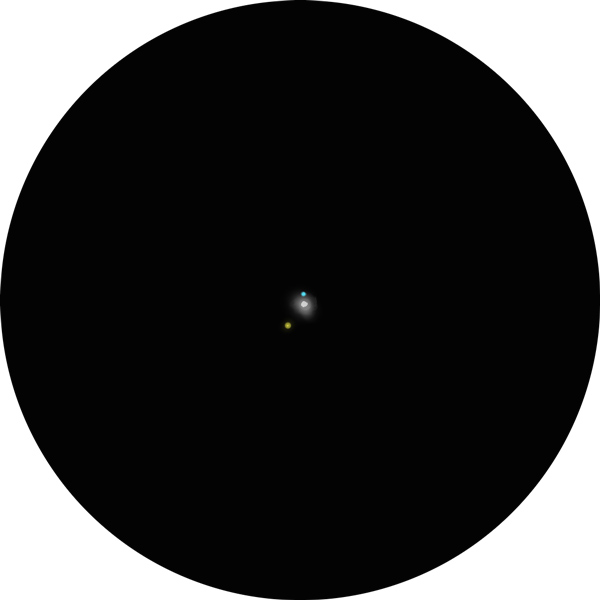
Patches of haze come and go from the west while I wait for small patches of sky to clear so I can observe. It appears Iota Cass will be the only object I’ll view tonight, but it is worth it!
The star system appears directly overhead. I have landed on the area using my wider (25 mm) eyepiece, but I can’t make out the three stars. With the winds picking up and fog blowing in, I’ve moved to my 12mm eyepiece with the Barlow.
I can make out the stars now, and it appears that a larger cloud will soon obscure my view. It’s true: the primary star is white, while the one farther away is yellowish, and the third star, nestled near the primary, appears bluish. It takes a fairly high magnitude to see the blue star right by the primary.
Key Stats
| Constellation | Cassiopeia |
| Best Viewing | Late Fall / Winter |
| Visual Magnitude | +5, +7, +9 |
| Absolute Visual Magnitude | +3.66 |
| Separation | Between AB 2.6″ | 198AU Between AC 6.7″ |
| Position Angle | Between AB: 228° Between AC: 117° |
| Distance from Earth | 133 ly |
| Orbital Period | 620 years |
| Milky Way Location | Orion Spur |
| My Viewing Grade | B |
| Designations | SAO 12298, Struve / STF 262, Iota Cas |
Sources and Notes
The banner image is of the constellation Cassiopeia by pithecanthropus4152 and is shared under the Creative Commons Attribution-Share Alike 4.0 International license.
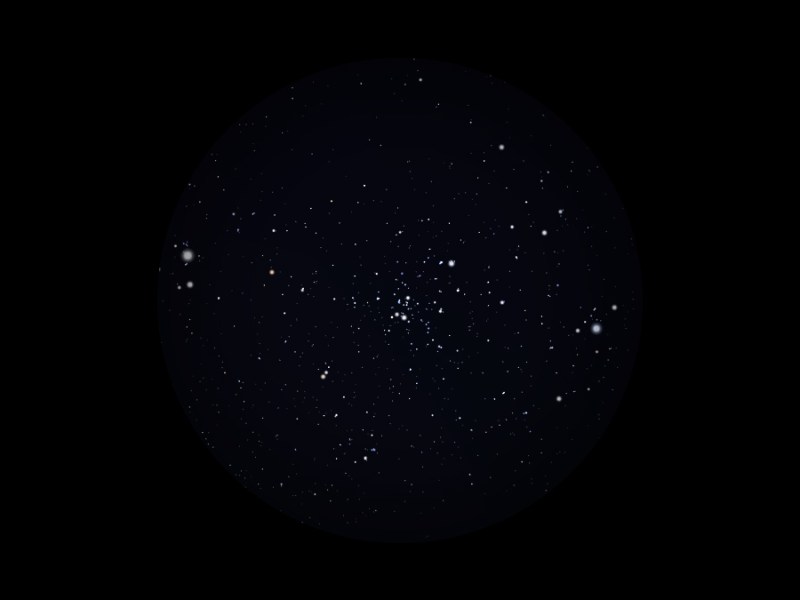
Sketch by Wayne McGraw



 The Garden Astronomer
My favorite multi star system for observing! My reference when I start observing for the night as to how good the seeing will be. I see the closer star as blue also.
LikeLike
Thanks for sharing your observation on this Wayne.
LikeLike