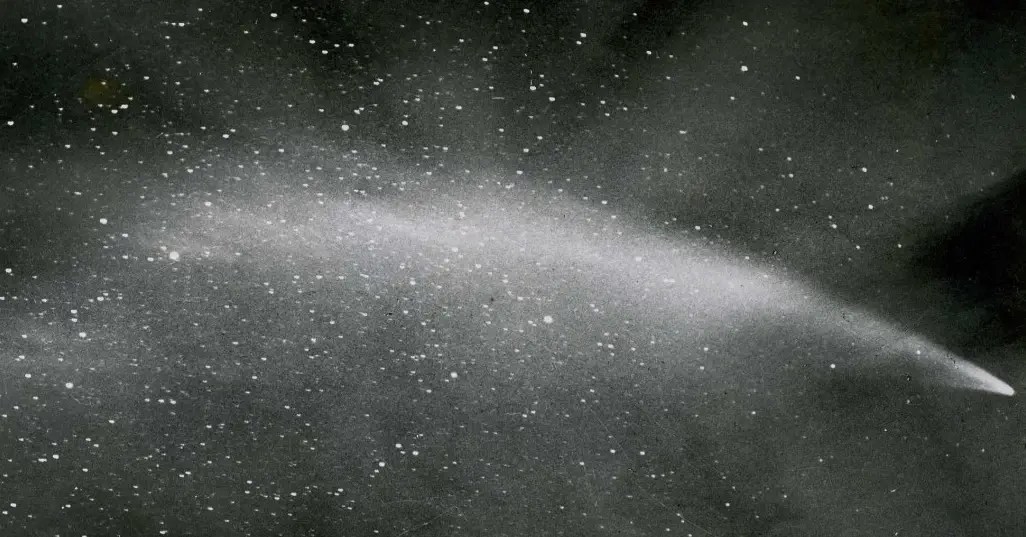
The year 1910 was supposed to belong entirely to Halley’s Comet. For months, the printing presses had been humming, priming the public for its anticipated spring return. The world was waiting.
But the cosmos decided on a surprise months earlier.
Premier Diamond Mine, South Africa
It’s January 12, 1910. The Transvaal Premier Diamond Mine in South Africa is thick with the dust of the night shift. A group of miners emerges from the mine before dawn.
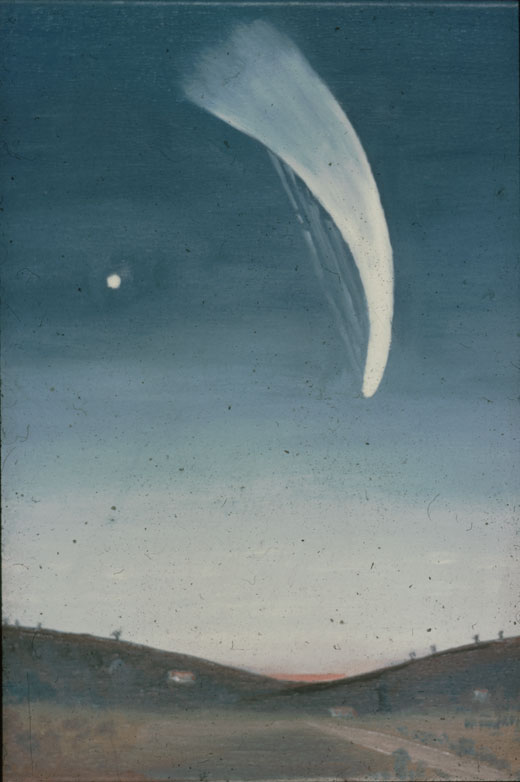
Overhead, cutting through the purple of the pre-dawn horizon, is a hazy, uninvited streak of light.
“Is that it?” one of the miners mutters, wiping grime from his brow as he stares eastward. “The one from the papers?”
Courtesy of The Patrick Moore Collection for personal use
“Can’t be,” another replies, his voice hushed. “They said Halley’s wasn’t due until later this year. This thing has no business being here.”
In a world before the instant hum of global communication, the miners start talking. And word spreads as it makes its way into the nearby towns.
Three days later, the rumor reaches a railway station in the nearby town of Kopjes.

Before the first rays of sunrise can touch the steel tracks, three men stand on the platform, their collars turned up against the morning air. Bags rest at their feet, but their eyes are fixed on the eastern sky. For twenty unbroken minutes, they watch the glowing guest climb steadily through the dark.
“That’ll be Halley’s,” one of them says finally.
The others consider the thought in silence. The newspapers had been talking about Halley’s for months, filling columns with charts and predictions. It makes sense that the sky would finally deliver.
“Must be early,” another mutters, checking his pocket watch.
A whistle blows in the distance. They pick up their bags, step onto the train, and go on with their morning, entirely unaware of what they actually witnessed.
Meanwhile, on the other side of the world, the sky plays the exact same trick. That very same morning, a man named T. P. Laffey leads a party of hikers up the rugged slopes of Ben Lomond Peak in New Zealand. Somewhere along the early ascent, the mountain air grows sharp, and the group stops.

Rising vertically from the dim silhouette of the ridge is a tail of light, broad and like a wide brushstroke of luminous gas. Laffey stands transfixed. He’s convinced it’s Halley’s Comet finally returning from a 76-year voyage through the solar system.
Back in Johannesburg, everyday folks notice the sky is misbehaving. The editor of a local newspaper, sensing a story, phones the Transvaal Observatory.
The tip lands on the desk of Robert Innes, the observatory’s director. Innes is a self-taught Scotsman who left school at twelve and never set foot in a university lecture hall.
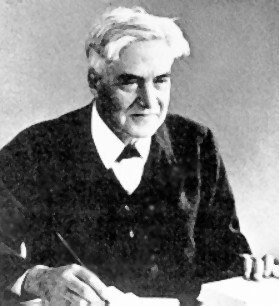
Yet, his passion for the night sky had earned him a Fellowship of the Royal Astronomical Society by the time he was eighteen. A wine merchant in Sydney before astronomy claimed him entirely, he possessed the kind of determination that led him to spend countless nights sweeping star fields for new discoveries.
On the morning of January 17, Innes adjusts his 9-inch refractor, sweeps the eastern horizon in the constellation Sagittarius, and catches the interloper. There, a smudge of light, like a breath on glass, appears to the astronomer. And now, the world will soon hear more about the uninvited guest.
The Daytime Comet at Perihelion
But January 17 has one more trick up its sleeve. It isn’t merely the day astronomers finally catch up to the comet; it is the exact day the icy wanderer reaches perihelion — its closest, most furious encounter with the sun.
As the morning sun climbs toward noon, the comet refuses to dissolve into the daylight glare.
By midday, people hold up a hand to shield their eyes from the sun, scan just a few degrees away, and see the comet blazing in broad daylight with the naked eye. It has swollen to an astonishing magnitude of -5, a bright, solitary light outshining Venus at her most brilliant.
A Comet Without a Name
Even at this point, at the height of its glory, the comet has no name.
In the rush to spread the news, a telephonic error somewhere between Innes’s observatory and the press leads reporters to initially christen the visitor “Drake’s Comet.” By the time the errant ink is dry and the error is caught, the wrong name has already flown into thousands of homes across the globe.
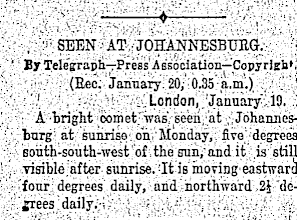
Because the comet had ambushed the Earth out of nowhere, there was no single astronomer to claim it, no human surname to anchor it to the ground. Left to find their own way, regular folks just called it what it was: The Daylight Comet, or The Sunset Comet. But the firmament doesn’t care much for our labels.
Neither name sticks permanently. It would ultimately be entered into the history books as nothing more than the Great January Comet of 1910. It’s named, in the end, for the passing month it chose to grace our small corner of the universe.
Arriving in the Northern Hemisphere
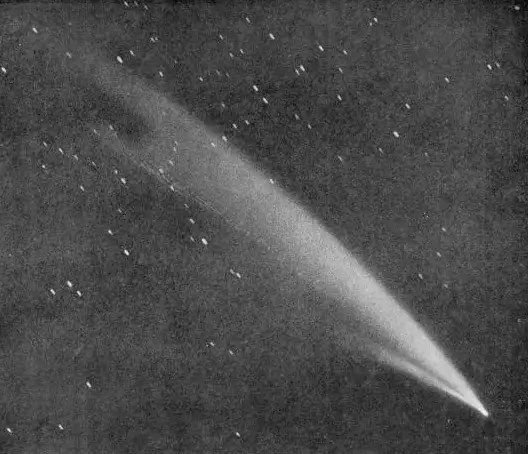
By the evening of January 20, the comet crosses into the Northern Hemisphere and into the constellation Capricornus. Its light pierces the dusk like a silver blade. Even while battling the washed-out glare of the bright moon, it matches Venus in intensity, casting a dust tail that carves a ten-degree path across the sky. That’s roughly twenty times the width of a full moon.
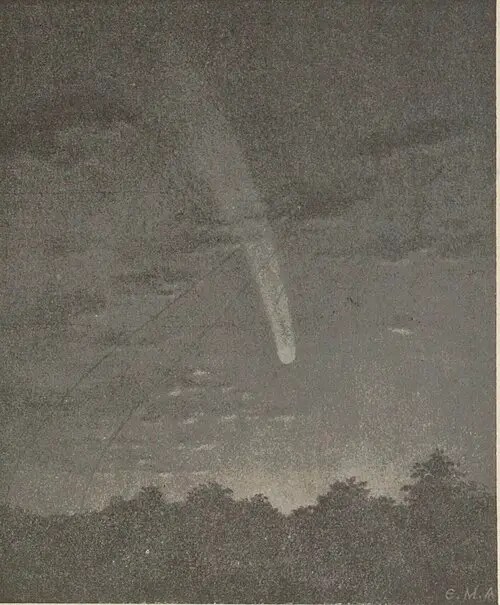
Across the American South, people are stepping outside to look up. In Sulphur Springs, Texas, Captain W. B. Baxter — a local weather observer and amateur scientist of some reputation — sets up his telescope on the lawn as the sun goes down and invites his neighbors over.
Friends gather in the cooling evening air while Baxter holds court, pointing his scope into the dusk and explaining how an icy rock can send a silver blade across the sky. It is the kind of night any backyard astronomer would give anything to share. The next day, even the editors at the Dallas Morning News can’t help but run a small paragraph about Captain Baxter’s evening.
Days later, on January 26, twelve-year-old Helen Tufts, living in Exeter, New Hampshire, opens her diary before bed and pens a quaint fragment of history: “And we all saw the comet. Thea, Jim, Henry and all of us.”
Across town that same evening, fifteen-year-old Marion Louise Tyler records a simpler note in her own journal: “Saw a comet about six o’clock.”
Decades later, when the Exeter Historical Society transcribed Helen’s diary, the researcher flagged the entry for verification, suspecting a mistake. January 26 was four full months before Halley’s Comet would become visible to the naked eye in New Hampshire. They assumed the young girl had confused her months or misdated the page.
But Helen wasn’t wrong.
She and Marion had not misdated a thing. They had simply witnessed the unexpected display of the Great January Comet of 1910—also known as the Daylight Comet. Like so many amateur observers across the centuries, they had looked up and left behind a trace of stardust in the margins of a diary.
Helen even followed up a few days later, noting they had seen the comet after 5:30 p.m. Marion had viewed it at 6 p.m., just after dusk. The two young astronomers never lost their enthusiasm. Months later, both observed Halley’s Comet in the evening sky. Helen drew a picture of the comet’s tail pointing toward Venus and wrote: “Its tail was very long. It stretched nearly half way up to Venus.” Meanwhile, Marion mentioned seeing “a fine view of Halley’s Comet in the west.”
Into the Dark
As February arrives, the great comet drifts out of the twilight and into the deeper black of night, its central nucleus beginning to dim. Yet the masterwork belongs to its tail. It reaches a staggering 50 degrees—half the distance from the horizon to directly overhead.
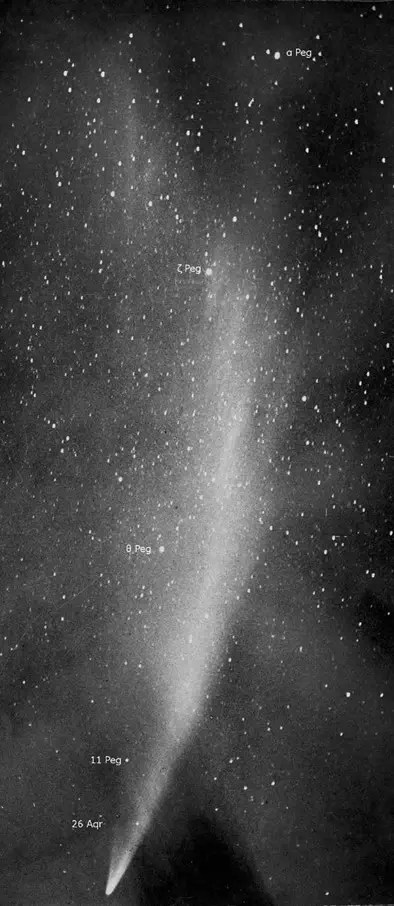
Within weeks, the comet slips below the threshold of what the naked eye can detect. It withdraws into the inky black of night, while onlookers turn their collective gaze back toward the impending arrival of Halley.
By spring, the comet quietly withdrew beyond the reach of glass, retreating on an immense orbit into the frozen backyard of the solar system, destined to stay hidden for thousands of years. It exited without ceremony, yet it left behind one final, brilliant illusion in the minds of those who watched it go.
When Halley’s Comet returned in 1986, many elderly observers shared childhood memories of seeing “Halley’s Comet” in 1910. Yet some of those recollections described a brilliant winter comet blazing across snowy skies—details that fit the Great January Comet far better than Halley itself.
It is hardly surprising. The Great January Comet had arrived first, brighter than anyone expected, and seized the public imagination. For many people, the memory of the winter visitor and the famous comet that followed became intertwined.
Halley may have won the headlines of 1910, but the Great January Comet won the memories.
Sources and Notes
Bortle, J. (2010, January). The great daylight comet of 1910. Sky & Telescope. https://skyandtelescope.org/astronomy-news/the-great-daylight-comet-of1910/
Drummond, J., Orchiston, W., Brown, C., & Horner, J. (2025). The Great January Comet of 1910 (C/1910 A1): A key opportunity missed by New Zealand astronomers . Journal of Astronomical History and Heritage, 28(3), 689–710 . https://doi.org/10.48550/arXiv.2511.12831
Famous Halley’s Comet. (1910, January 25). Lake Wakatip Mail, p. 5. Papers Past, National Library of New Zealand. https://paperspast.natlib.govt.nz/newspapers/LWM19100125.2.35
Great January Comet of 1910. Wikipedia. https://en.wikipedia.org/wiki/Great_January_Comet_of_1910
Great January Comet of 1910. Nature, Vol. 82, pp. 348–349. https://www.nature.com/articles/082348a0
Orchiston, W. (2001). From Amateur Astronomer to Observatory Director: The Curious Case of R. T. A. Innes. Publications of the Astronomical Society of Australia, 18(3), 317–327. doi:10.1071/AS01036
Neff, R. (2019, November 10). Daylight comet of 1910 portends end of Korean dynasty. The Korea Times. https://www.koreatimes.co.kr/opinion/20191110/daylight-comet-of-1910-portends-end-of-korean-dynasty
Rimkunas, B. (2022, February 10). Comet tales 1910. Exeter Historical Society. https://www.exeterhistory.org/historically-speaking/2022/2/9/comet-tales-1910
 The Garden Astronomer