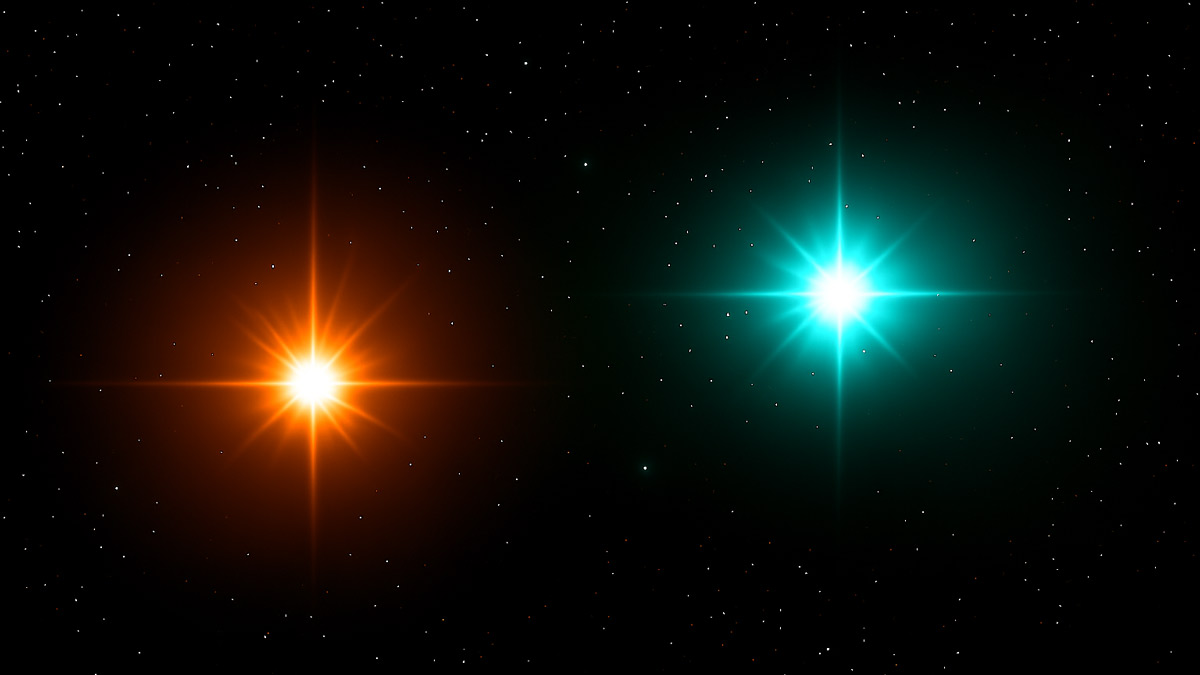
95 Herculis is a colorful binary star, looking like ruby and emerald gems placed together on black velvet. The binary lies in the constellation Hercules and is enjoyed on summer nights. Also known as 95 Her, SAO 85648, STF 2264, HD 164669.
Author Archives: Wayne McGraw
Iota Cancri: A Beautiful Double Star of Gold and Blue
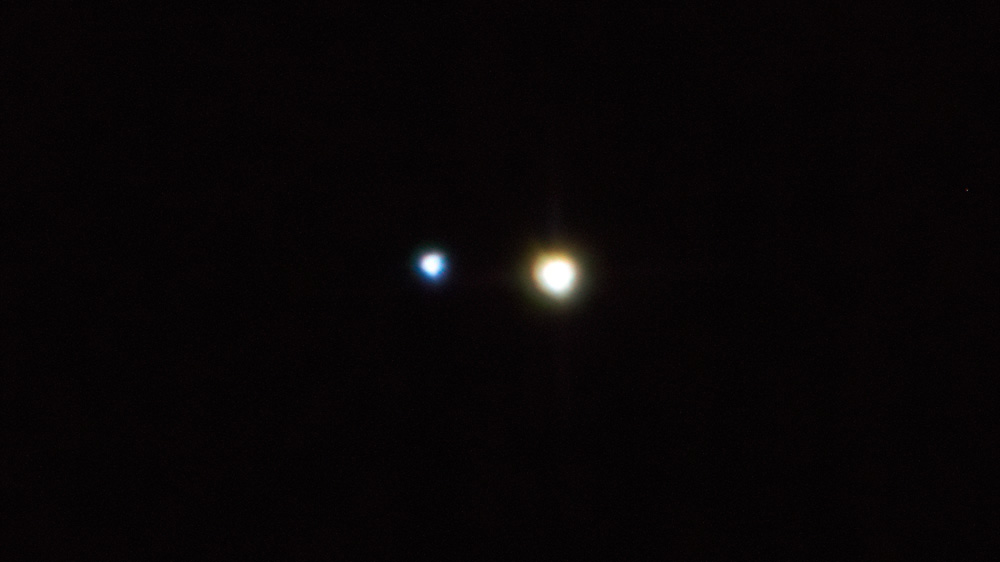
Iota Cancri is a beautiful double star in the constellation Cancer. It’s best viewed in the spring with its gold and blue color. It’s a great object in small scopes.
Mu Cephei: The Beautiful Garnet Star in Cepheus

Mu Cephei, also known as the Garnet Star, is a red supergiant star in the constellation Cepheus. It’s best viewed in autumn.
Zeta Aquarii (Struve 2909): A Tight Binary Near the Water Bearer’s Shoulder
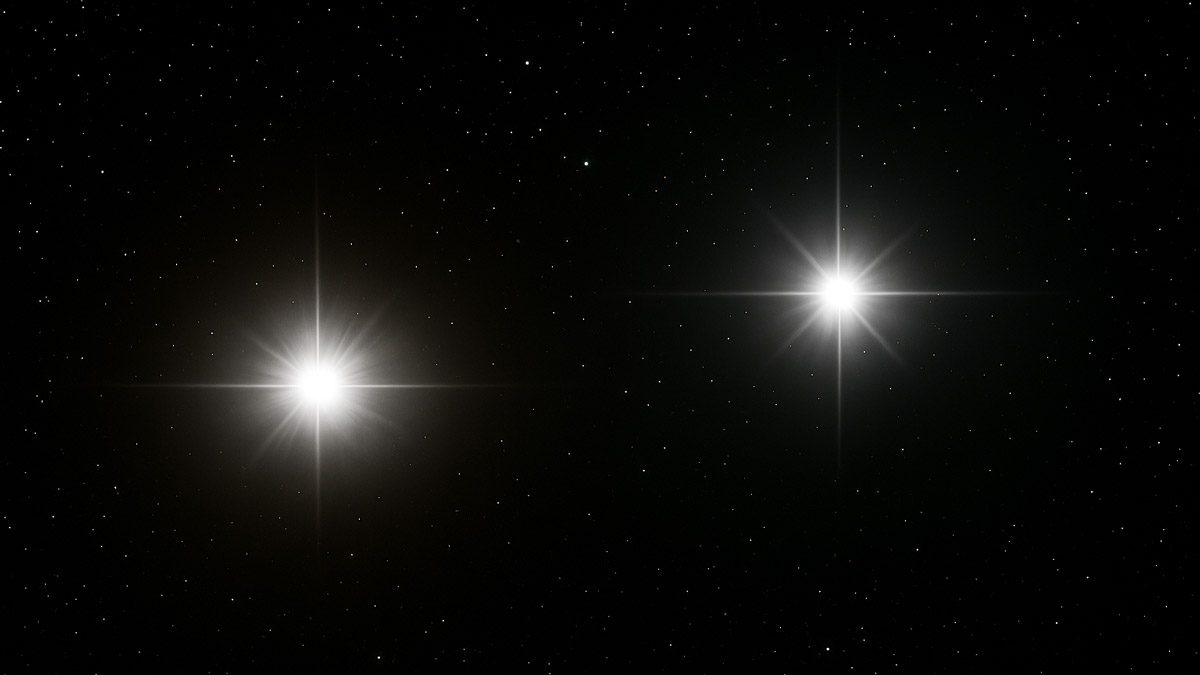
Zeta Aquarii, a binary star system in Aquarius, is about 92 light-years away. First identified by William Herschel in 1777, it appears as a single point to the naked eye. Both stars are similar F-type main-sequence stars, orbiting each other every 587 years, exhibiting complexity beneath their apparent simplicity. This post explores the star and illustrates what it looks like in the telescope. Also known as: STF 2909, SAO 146108, HIP 110960, GC 31398, HR 8558, Zet1 Aqr, 55 Aquarii, HD 213052, 55 Aqr
Struve 700 (V1804 Orionis): Double Blue in Orion’s Winter Cool
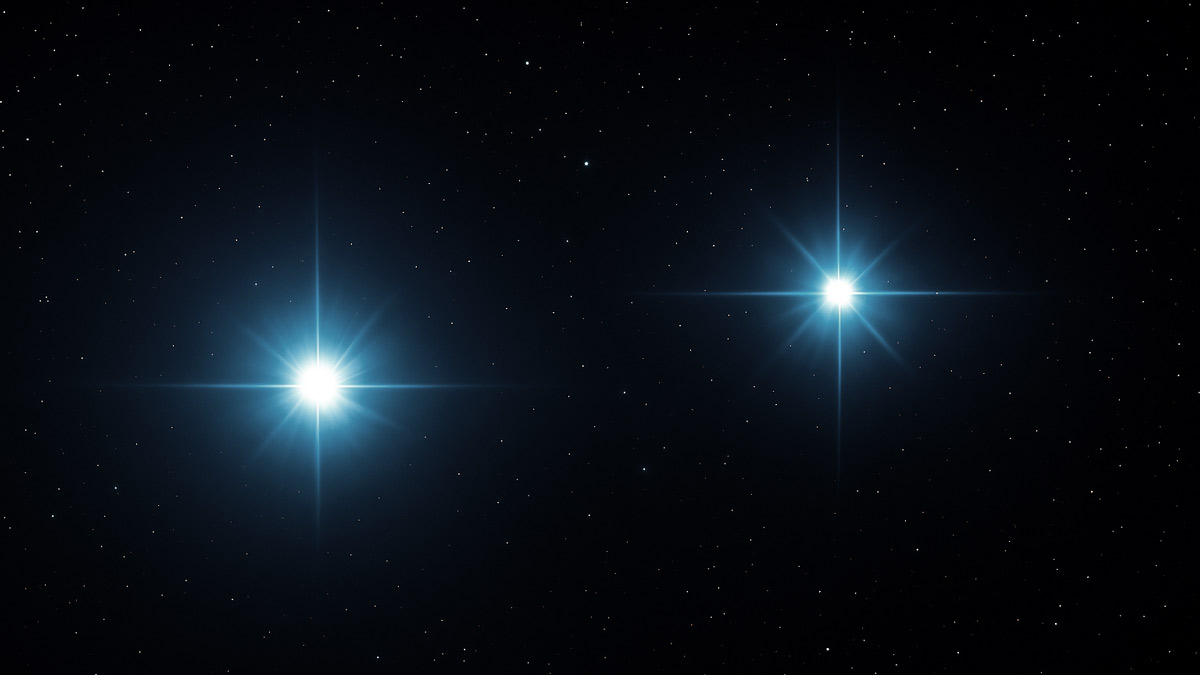
Learn about the double star in Orion called Struve 700 and V1804 Orionis. The pretty set of blue-white stars shine around 7.8 magnitude and are a tight pair in telescope. My sketch shows what the binary looks like through a backyard telescope. They are a great pair to seek out when observing through Orion, the hunter, on winter days.
Epsilon Arietis: A Rewarding, Tight Binary in Aries
Learn about Epsilon Arietis, a close binary white pair of stars in the constellation Aries, best viewed on autumn and winter nights. The two stars only lie 1.3 arcseconds apart, so a telescope will be needed to see both stars also known as Struve 333, STF 333, Eps Ari, SAO 75673, HD 18519, HR 887, HIP 13914, 48 Ari.
Struve 1850: A Wide Binary Star in Boötes
Struve 1850, a binary star system in the Boötes constellation, consists of two nearly identical A1V stars, easily observable with binoculars or small telescopes. Discovered by Friedrich Struve in 1823, they are over 800 light-years away. Their similar luminosity and proximity make them delightful targets for amateur astronomers. Also known as: STF 1850, HD 127067, SAO 83374, HIP 70786, HR 5414
Beta Draconis (Rastaban): The Dragon’s Eye
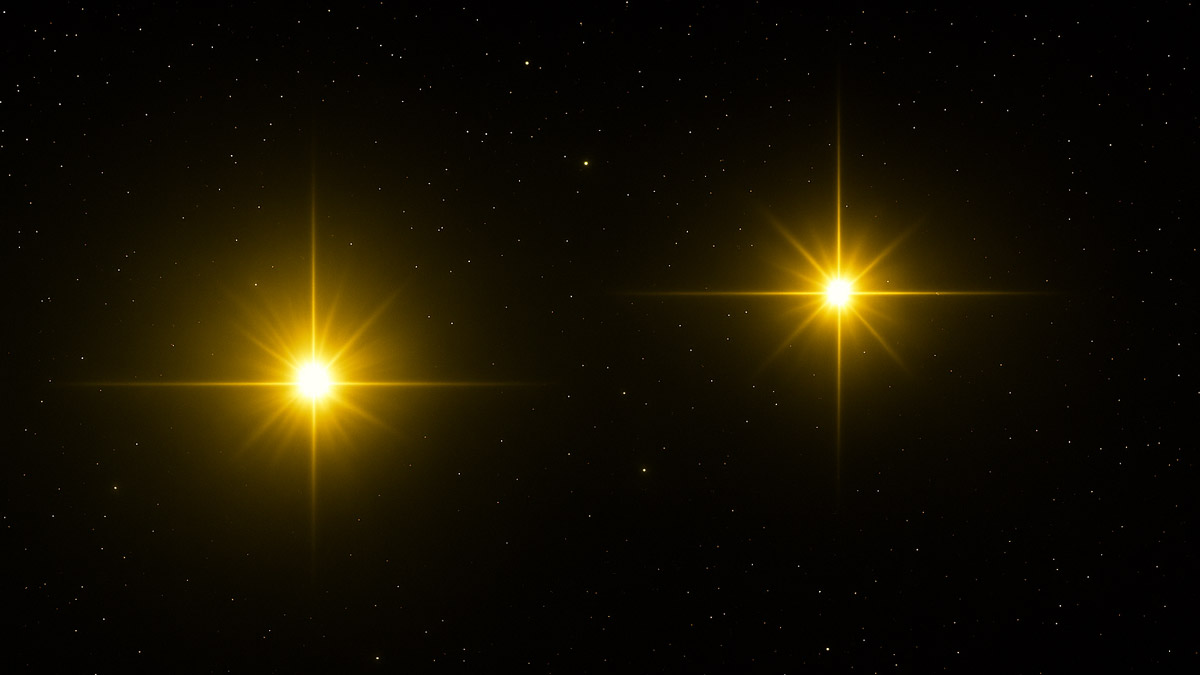
Beta Draconis, or Rastaban, is a prominent star in the constellation Draco, with an apparent magnitude of 2.8. This golden giant, situated 380 light-years away, is part of a binary system. Despite its brilliance, its companion is a dimmer star, visible only under optimal conditions. Also known as Bet Dra, Rastaben, Alwaid, Asuia, SAO 30429, HD 159181, 23 Dra, β Dra, 23 Draconis, HIP 85670, HR 6536, BU 1090
 The Garden Astronomer