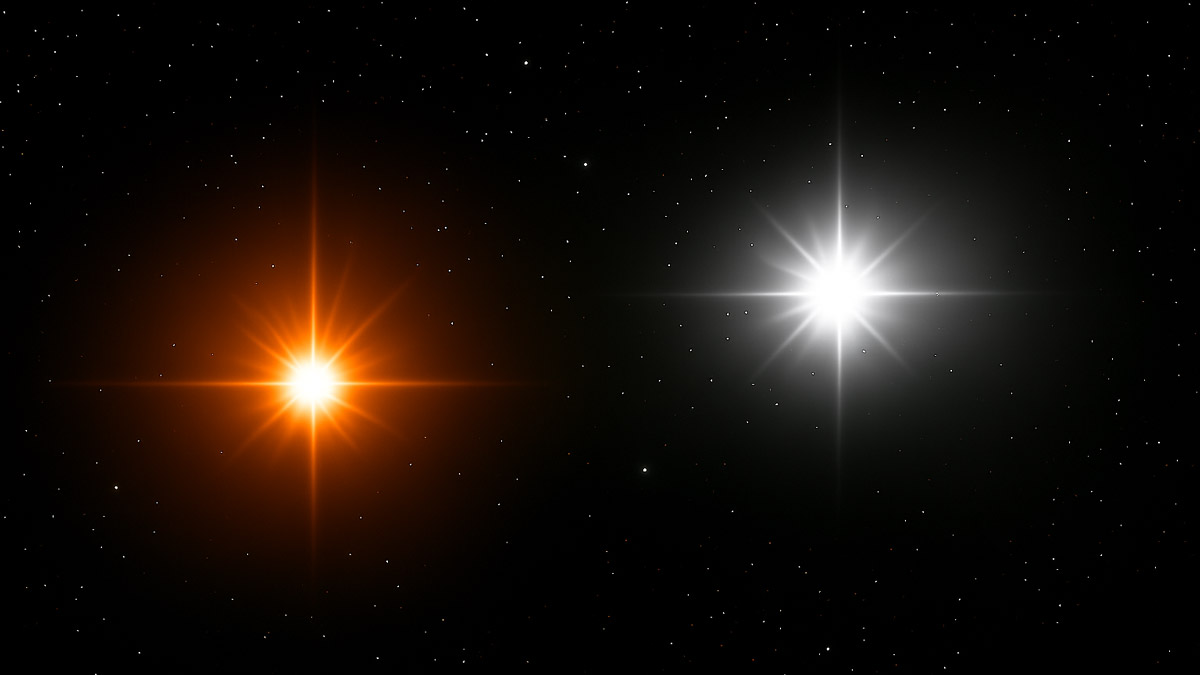
Nu1 Canis Majoris (also known as ν1 Canis Majoris) is a fairly bright binary in the constellation Canis Major. The two pretty yellow stars are wide apart enough for backyard observers with modest scopes to see both stars. The double is also known as Nu1 CMa, SHJ 73, SAO 151694, HIP 31560, HR 2423, HD 47138, 6 Canis Majoris, ν1 CMa.
6 (Iota) Trianguli: A Bronze and Blue Binary in the Constellation Triangulum
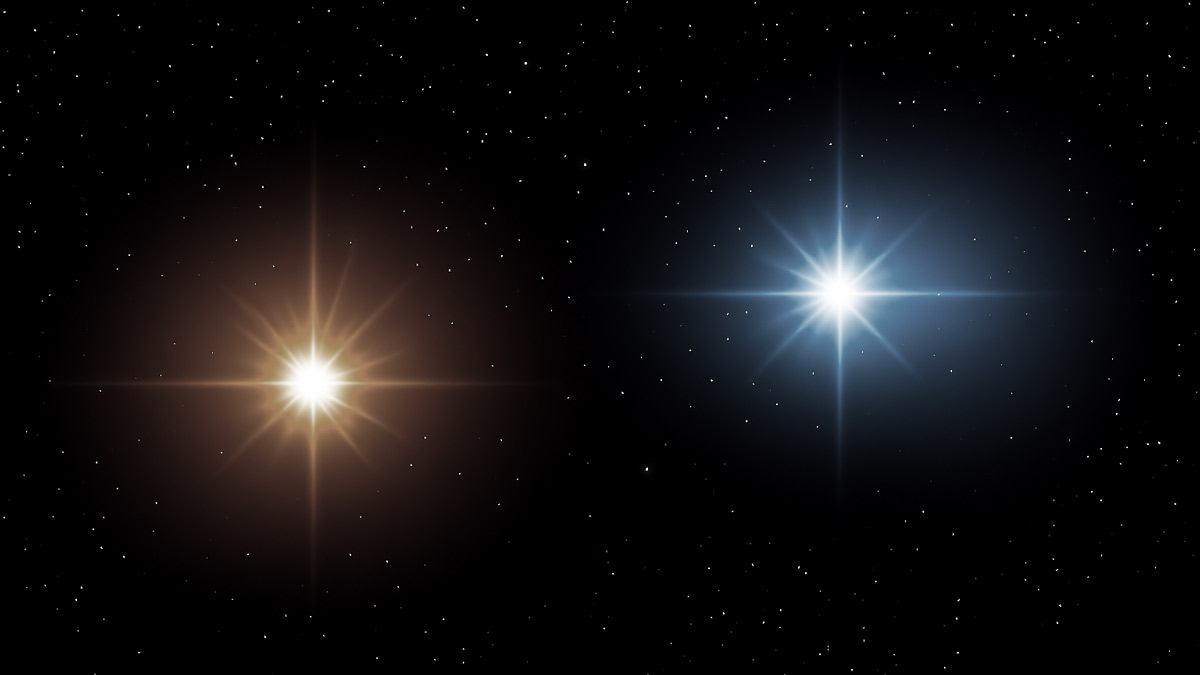
Triangulum is a distinctive northern constellation best observed in autumn and winter, featuring the Messier 33 galaxy and notable double stars like 6 Trianguli. Discovered by William Hershel, this binary system consists of a primary G5 giant and a fainter F5 dwarf star. It is a quadruple system with spectroscopic binaries.
Meissa (Lambda Orionis): A Luminous Multiple Star in Orion

Marking Orion's head is the bright star, Meissa. But it's more than that. Aim your binoculars or telescope toward Meissa, and you'll find a beautiful grouping of related stars. The star is also known as SAO 112921, HD 36861, Lam Ori, Struve 738, STF 738, HD 36861, λ Ori. The star is part of the Collinder 69 cluster.
HR 1997 (HD 38693): A Wide Binary Star in Taurus
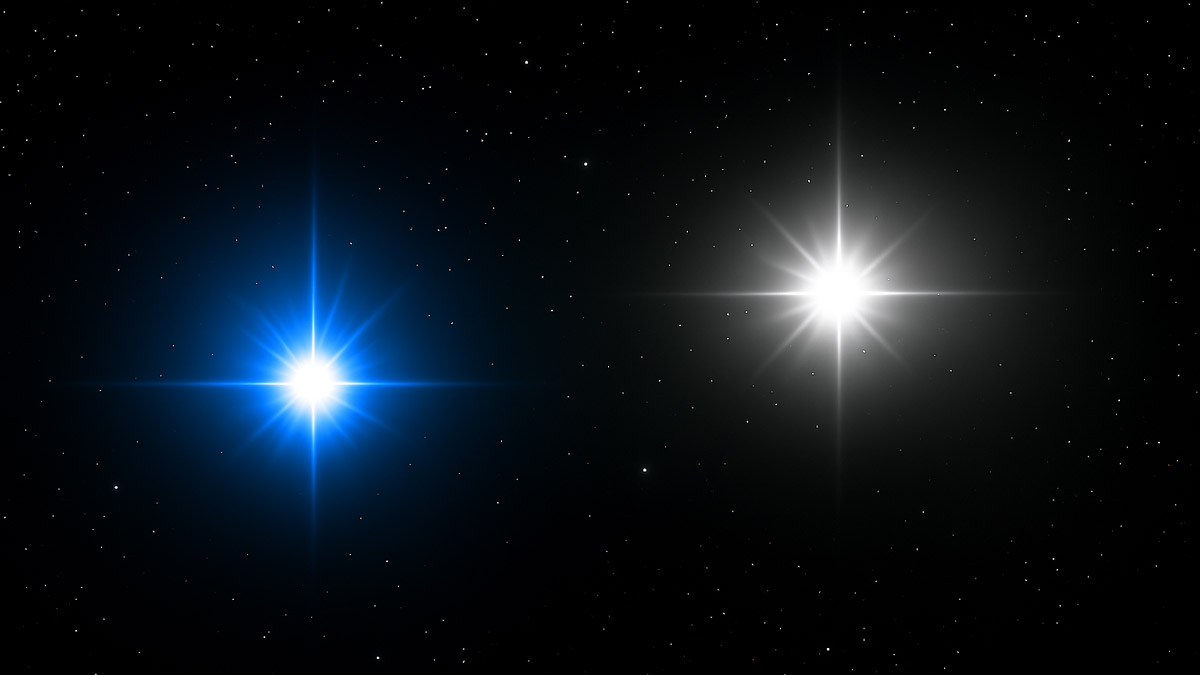
In the winter constellation of Taurus, lies HR 1997, a fairly faint binary that you can see with any moderate backyard telescope. The good news is the pair of stars lie far apart, 75 arcseconds, from each other. The double is also known as SAO 77578, ADS 4392, HR 1997, HD 38693, HIP 27421, BD+20 1105.
Sisters Capture the Essence of the Stars

Discover how two sisters blend astronomy and perfumery to capture the cosmos in a bottle, tracing a lifetime of starlit memories and inspiration.
IC 348: A Stellar Nursery and Fireworks Show in Perseus
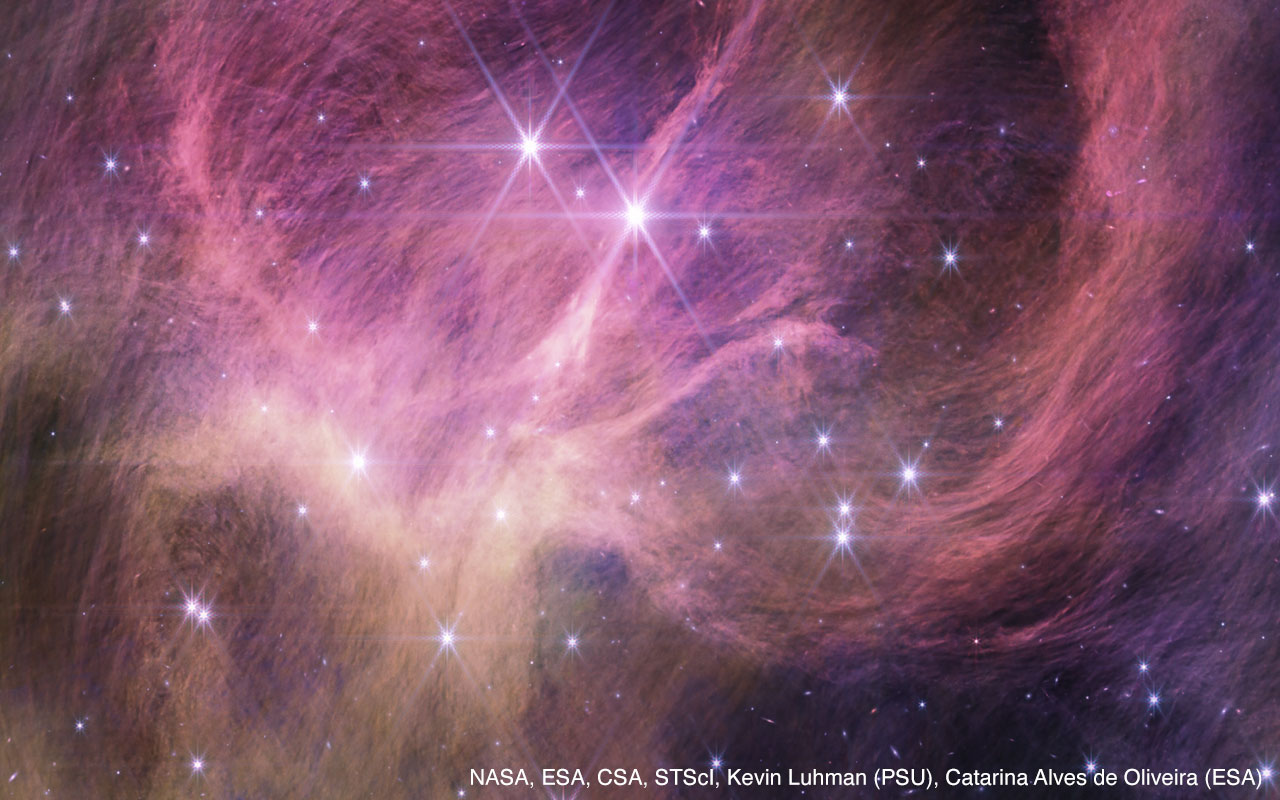
IC 348 is a beautiful star cluster wrapped in a veil of milky nebulosity. On autumn and winter nights, turn your attention to the Perseus constellation and this cosmic cradle where stars are born. It's also known as C 0341+321, Collinder 41.
Epsilon Persei (Struve 471): An Aquamarine Celestial Jewel in Perseus
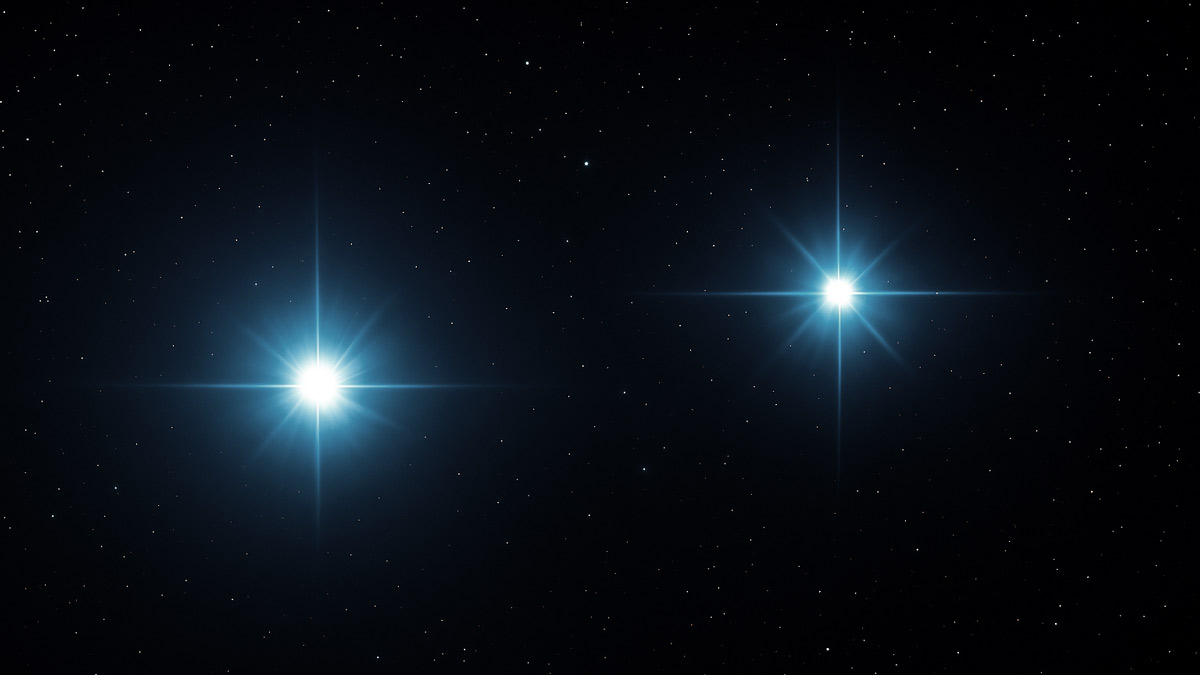
In the autumn constellation of Perseus, Epsilon Persei shines with a beautiful blue-white hue. Backyard astronomers will appreciate the star's pretty aquamarine color and the challenge of seeing the dim companion star nearby. This multiple star system, also viewed as double star, is a bright target to view in fall. It also known as Struve 471, STF 471, HD 24760, SAO 56840, HR 1220, Eps Per, HIP 18532, Adid Australis
Struve 274: A White Binary Star in Cetus the Sea Monster
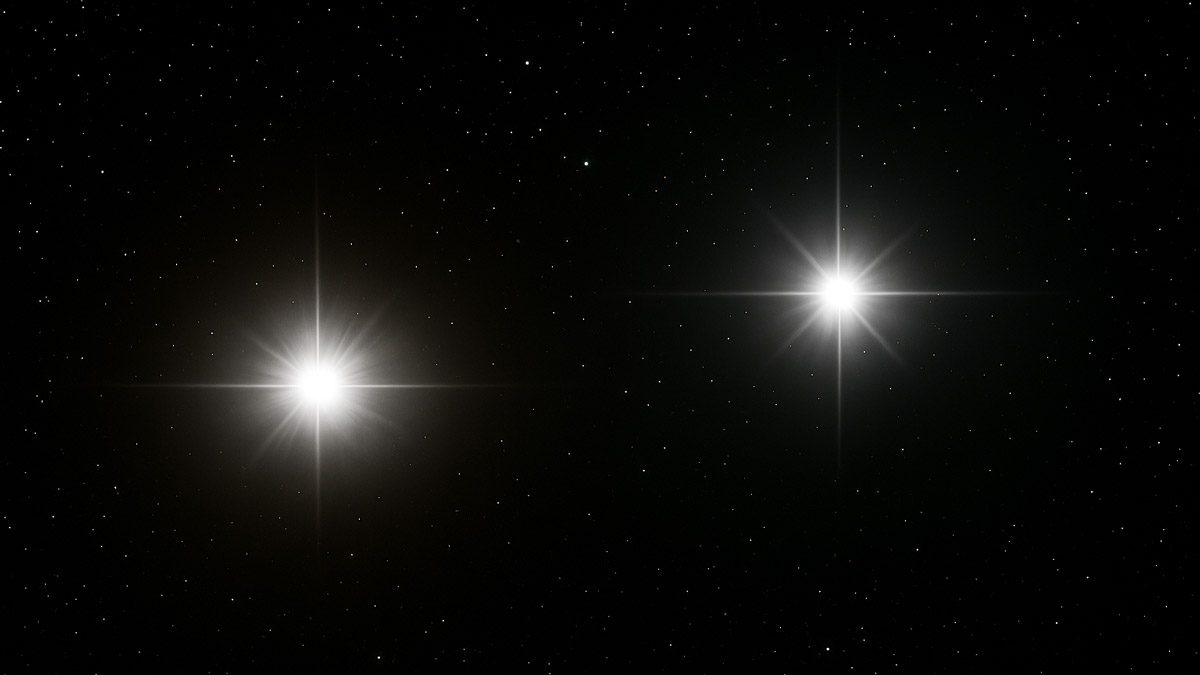
Among Cetus' notable stars lies the binary star Struve 274, a quaint pair of white stars that are fairly easy to view in any modest backyard scope. Struve 274's stars are close in magnitude and color. The primary star shines at magnitude +7.5, while the nearby secondary is slightly dimmer at magnitude +7.6. The stars lie a healthy 13.7 arcseconds apart, making them an easy binary target for amateur astronomers. Also known as STF 274, HD 15695, SAO 110591, HIP 11737.
 The Garden Astronomer