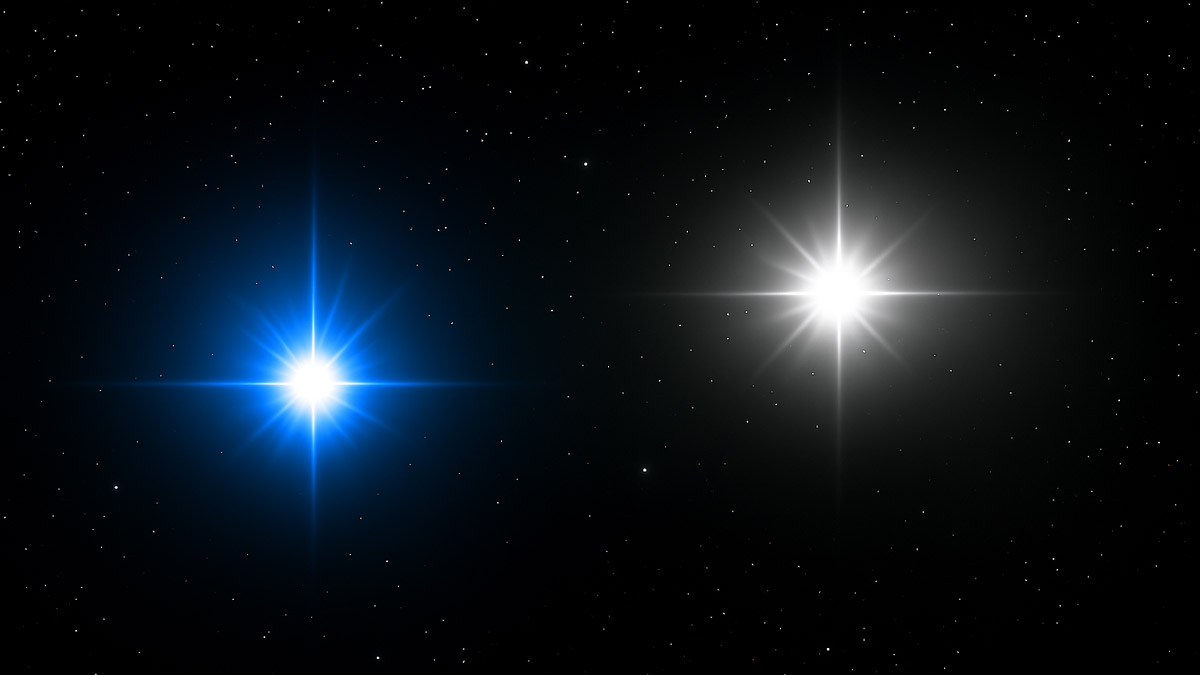
41 Aurigae is a double star in the Auriga constellation, most visible during winter in the Northern Hemisphere. Observers report inconsistent colors for the stars, ranging from 'blue and pale apricot' to 'silvery white and pale violet'. The author's observations match with Smyth's, stating the primary star appears silvery white with the secondary star slightly violet, or blue. Despite the contrasting reports, the pair's brightness, proximity, and color disparity contribute to their appeal.
Kappa Andromedae: A Double Star with a Companion Exoplanet

Kappa Andromedae resides in the constellation Andromeda, a constellation taking a prominent position high in the sky on late autumn nights. Due to its bright visual magnitude of 4.1, Kappa Andromedae is viewable with the naked eye, even from suburban locations. A gas giant exoplanet orbits the star. Also known as Kap And, SAO 53264, HJ 1898, HIP 116805, HR 8976, HD 222439, 19 Andromedae, k And.
Struve 108 (HD 7853): A Light Yellow Double Star in Andromeda
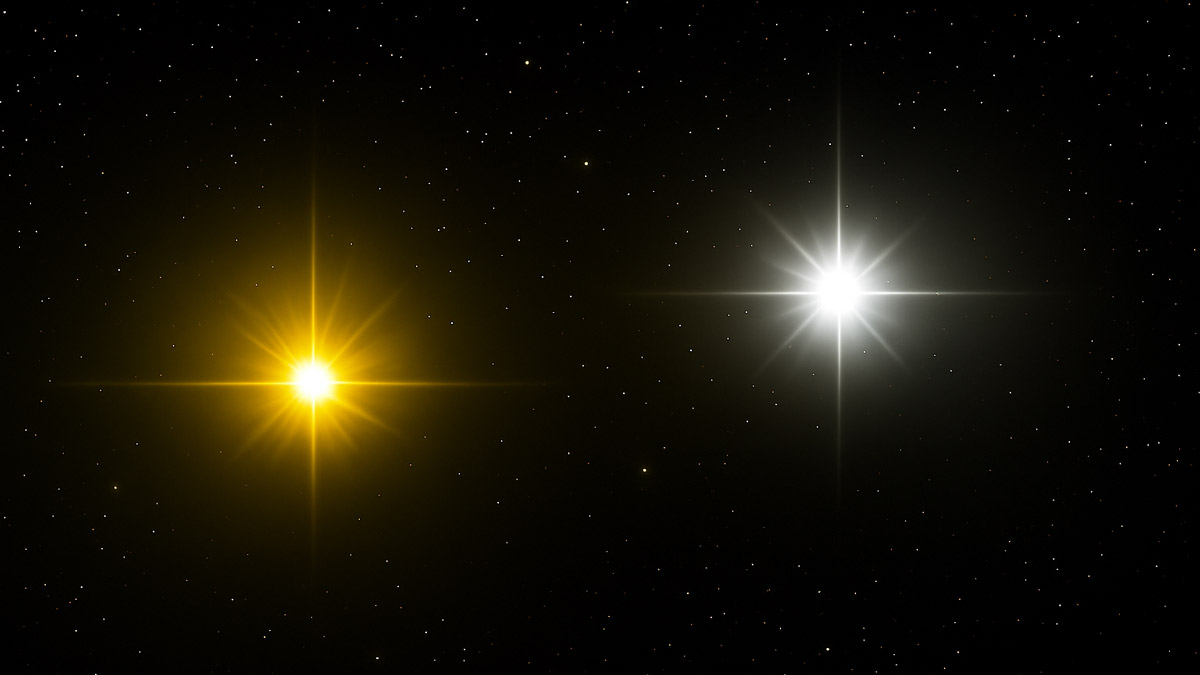
Nestled within the constellation of Andromeda, the double star Struve 108 is a yellow-white colored shines with a magnitude of +6.5. Also known as HR 379 and SAO 54592.
HD 2767 (HR 122): A Pumpkin Binary Star for Halloween in Andromeda
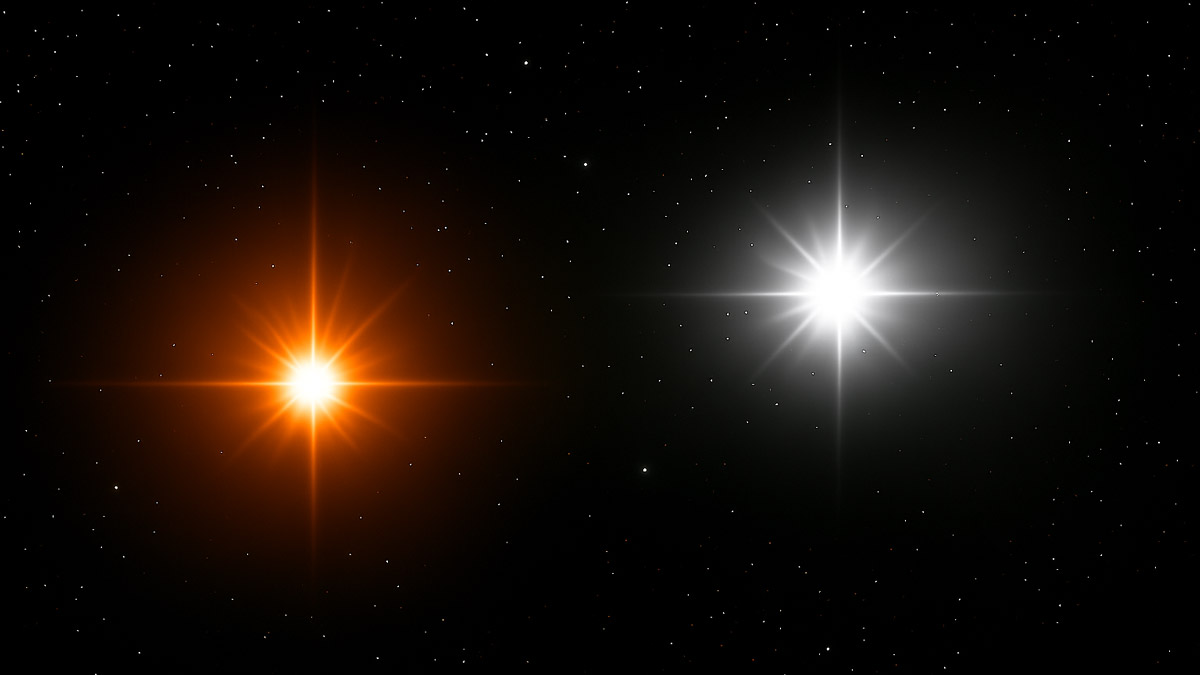
Nestled within the constellation of Andromeda, the binary star HD 2767 is a pumpkin-colored binary star, making it a perfect target on autumn nights. Also known as HR 122 and SAO 53956.
Struve 2486 (HD 179558): A Buttery Binary in Cygnus
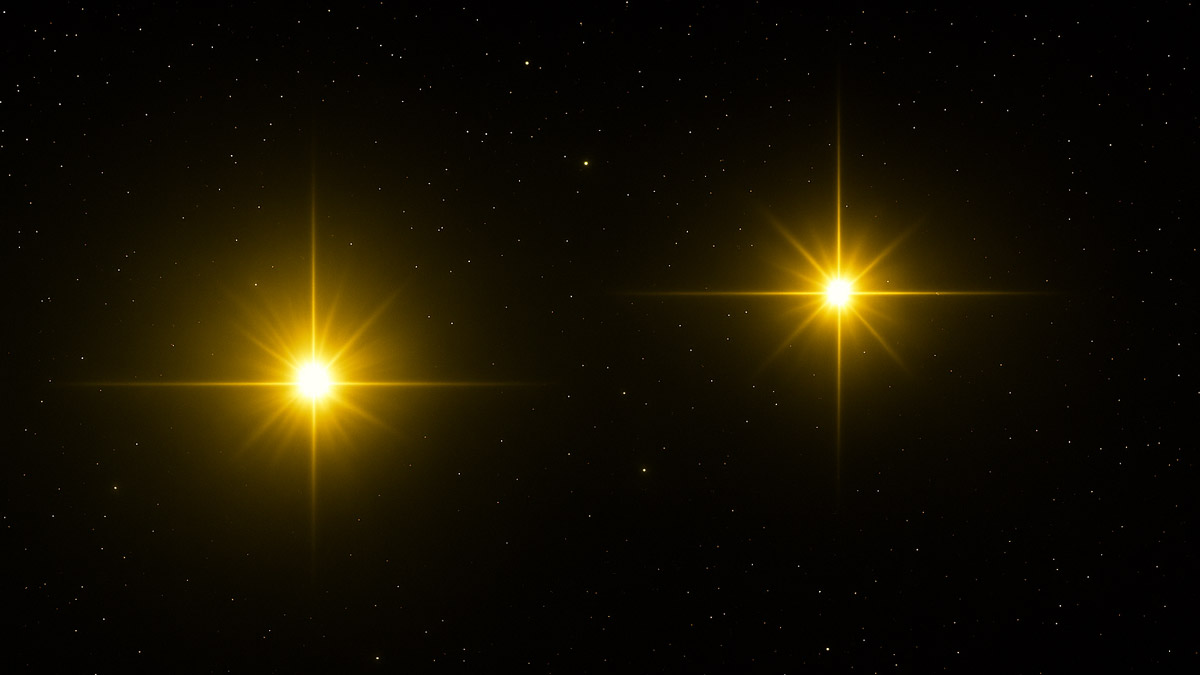
The binary system, Struve 2486, was first recorded in 1819 by astronomer Friedrich Georg Wilhelm Struve. It can be easily observed through most modest backyard telescopes. Both stars in this binary system are bright, yellow and have a similar magnitude.. Also known as HD 179558 and SAO 48192 and HR 7293.
Struve 2470 and 2474: Lyra’s Other Entrancing Double Double

During summertime and autumn, Struve 2470 and 2474 make for an entrancing sight in the night sky. These two double-star systems are located close to each other and appear parallel due to their orientation. These four stars can appear in the eyepiece together, making for a beautiful harmony in the cosmos. Also known as SAO 67870 and SAO 67875.
Struve 2063: A Golden Pair in Hercules

100 Herculis is a close binary star of two equally bright stars like diamonds on black velvet. The binary lies in the constellation Hercules and is enjoyed on summer nights.
Struve 2840: An Easy to See Blue and White Pair in Cepheus
The double star Struve 2840 is located in the northern sky within the constellation Cepheus. Backyard astronomers should find it pretty easy to separate Struve 2840's two stars, which are separated by 18 arcseconds. The pair is also known as STF 2840, SAO 33819, HD 208063, HR 8357.
 The Garden Astronomer