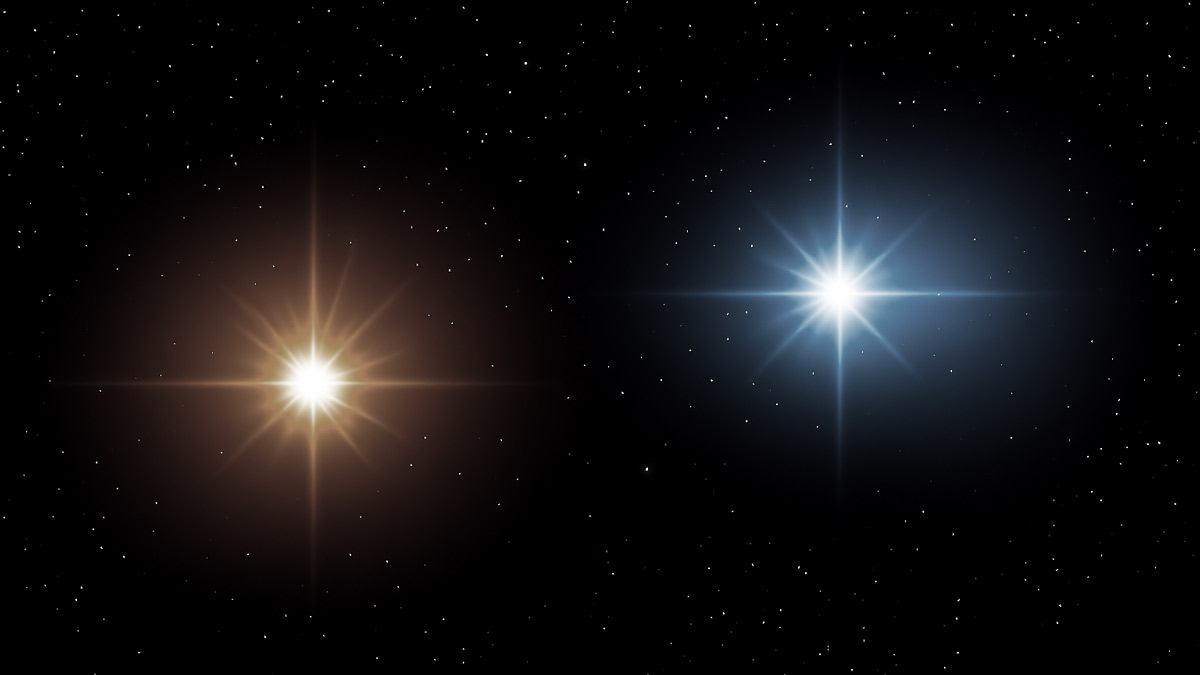
Struve 649 is a double star featuring a fairly bright primary white-blue colored variable star with a dimmer blue companion nearby. This quaint pair lie in the constellation Eridanus, the river, best viewed in winter. The primary star in Struve 649 is a variable star lingering around the 5th magnitude. This blue-white star has a stellar classification of B8V. At a friendly distance of 21.3 arcseconds away, the secondary star is more blue in color and is much dimmer at a magnitude of +9. This pair is also known as STF 649, SAO 131806, HD 33224, HR 1671.
Struve 742 (HD 37013): A Tight Binary Star Nestled Up to the Crab Nebula

The binary star Struve 742, also known as HD 37013, lies near the famous Crab Nebula in the constellation Taurus and lies 220 light years from Earth. The tight pair is best viewed on winter nights with a telescope. Also known as SAO 77313.
e Tauri (Struve 452): A Blue Primary with a Dim Companion in Taurus

e Tauri is a double star featuring a bright primary blue star with a dimmer secondary star in the constellation Taurus, the Bull. The magnitude +5 primary star shines blue and is classified as stellar type B3V. The dimmer viewable secondary star, at magnitude +9.8, appears white in color and is classified as a yellow-white F5V star. The two stars are separated by 9.2 arcseconds and lie 139 light years away from Earth. Also known as 30 Tau, SAO 93611, HD 23792, HR 1174, STF 452.
14 Aurigae (Struve 653): A Multiple Star System in Auriga
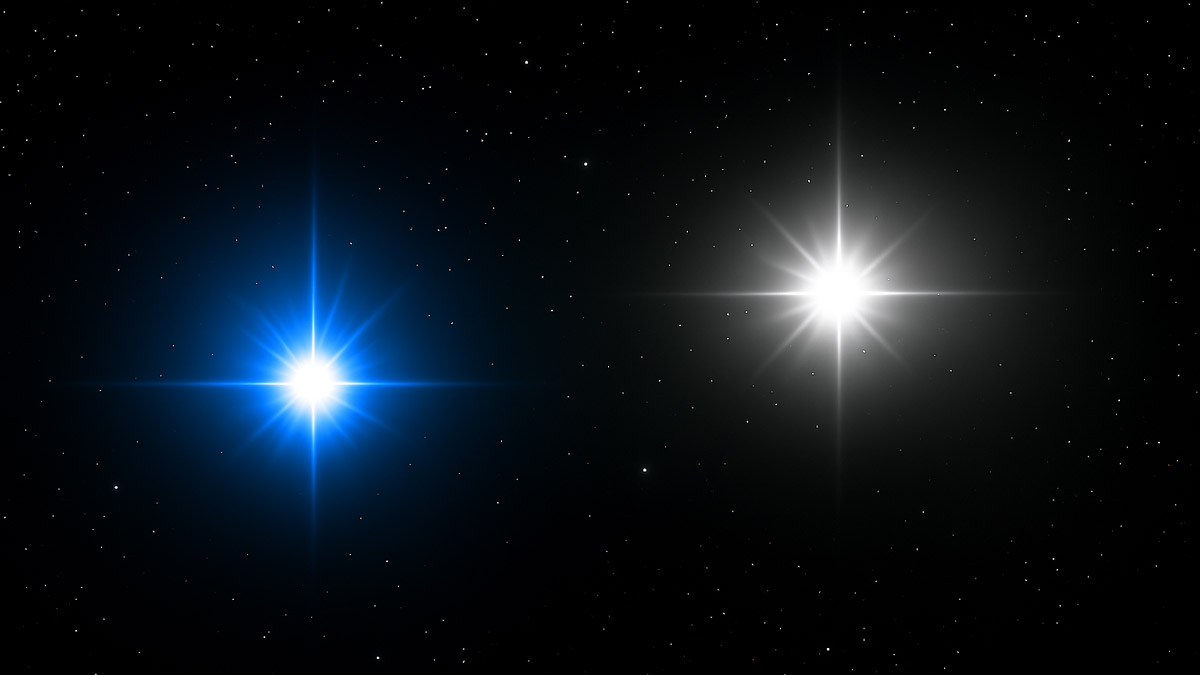
14 Aurigae, a prominent multi-star system in the Auriga constellation, features a bright primary star of +5 magnitude while the dimmer secondary appears blue. The stars are 286 light years away and separated by 14 arcseconds. As part of the Orion Spur in the Milky Way, 14 Aurigae provides insights into stellar evolution.
Struve 572: A Tight White Binary Star in Taurus
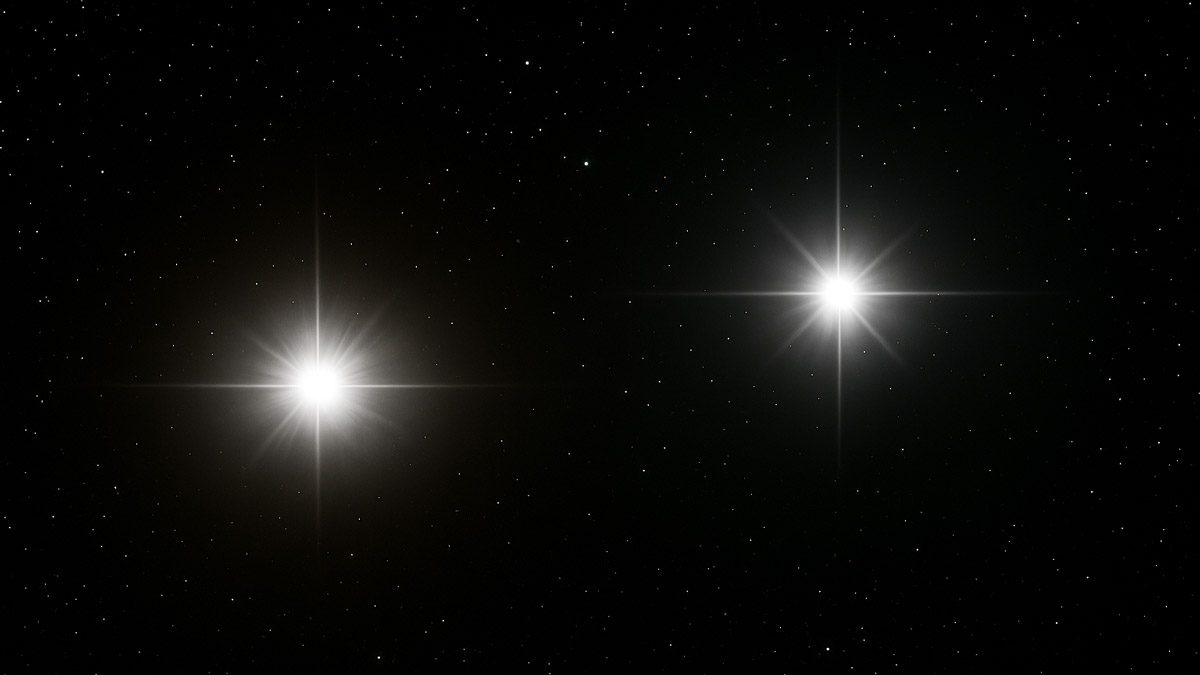
Struve 572 is a nice binary star in the constellation Taurus, the Bull, most prominent during winter evenings in the Northern Hemisphere. The pair were first observed by astronomer Friedrich Georg Wilhelm Struve in 1822. Modest backyard scopes should be able to split the two stars, which are only separated by 4.5 arcseconds. The double is also known as STF 572, SAO 76682, HR 1470, HD 29364.
41 Aurigae (Struve 845): A Lovely Pair with Debatable Color Differences in Auriga
41 Aurigae is a double star in the Auriga constellation, most visible during winter in the Northern Hemisphere. Observers report inconsistent colors for the stars, ranging from 'blue and pale apricot' to 'silvery white and pale violet'. The author's observations match with Smyth's, stating the primary star appears silvery white with the secondary star slightly violet, or blue. Despite the contrasting reports, the pair's brightness, proximity, and color disparity contribute to their appeal.
Kappa Andromedae: A Double Star with a Companion Exoplanet
Kappa Andromedae resides in the constellation Andromeda, a constellation taking a prominent position high in the sky on late autumn nights. Due to its bright visual magnitude of 4.1, Kappa Andromedae is viewable with the naked eye, even from suburban locations. A gas giant exoplanet orbits the star. Also known as Kap And, SAO 53264, HJ 1898, HIP 116805, HR 8976, HD 222439, 19 Andromedae, k And.
Struve 108 (HD 7853): A Light Yellow Double Star in Andromeda
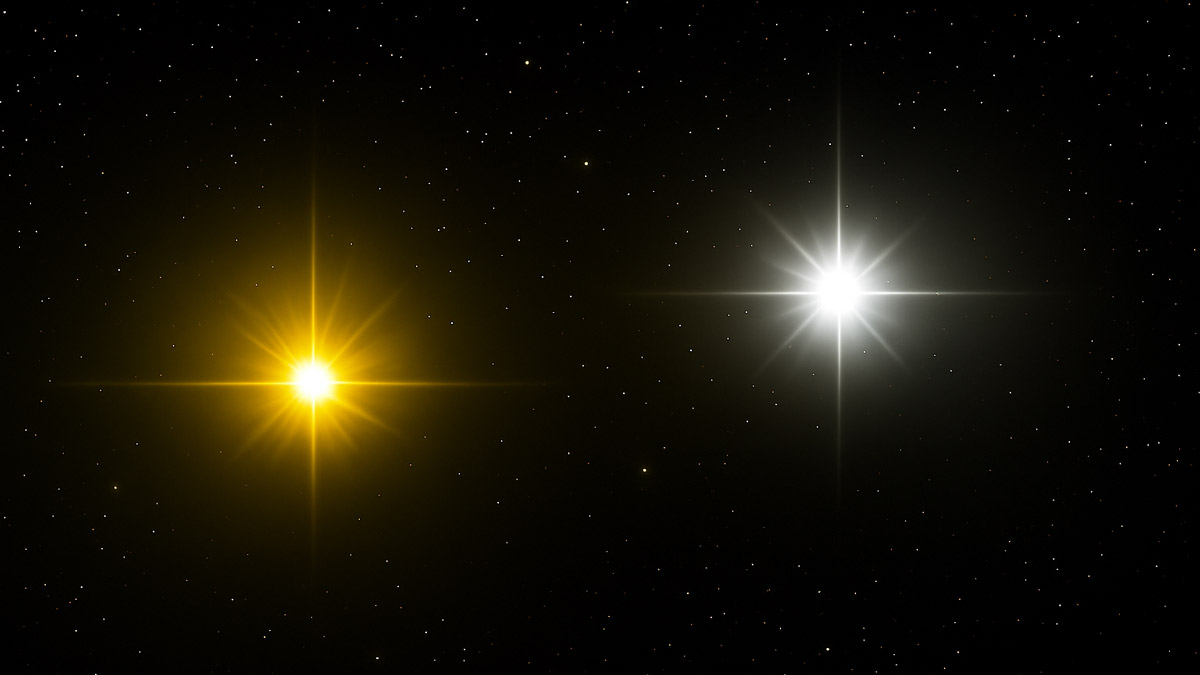
Nestled within the constellation of Andromeda, the double star Struve 108 is a yellow-white colored shines with a magnitude of +6.5. Also known as HR 379 and SAO 54592.
 The Garden Astronomer